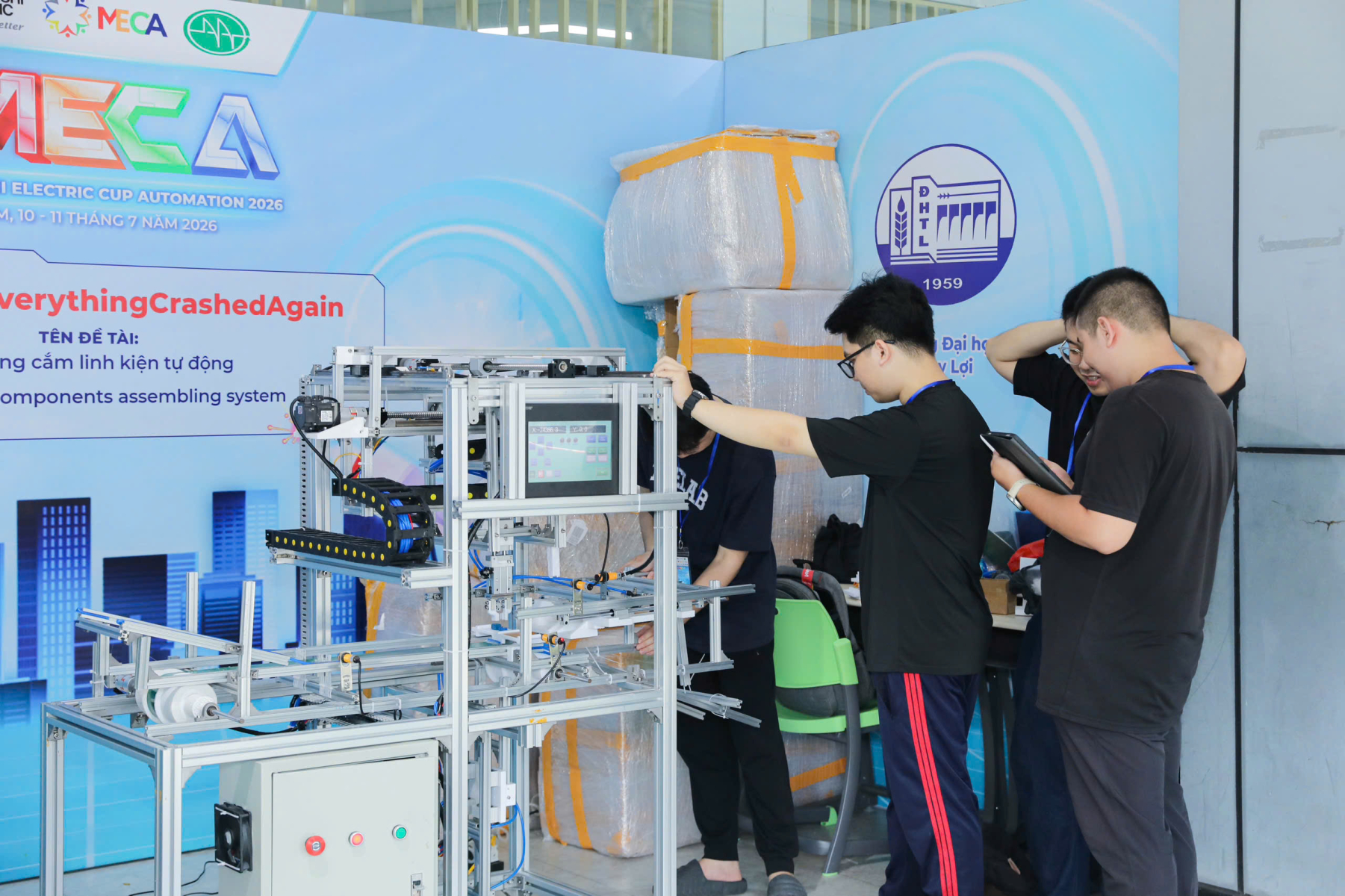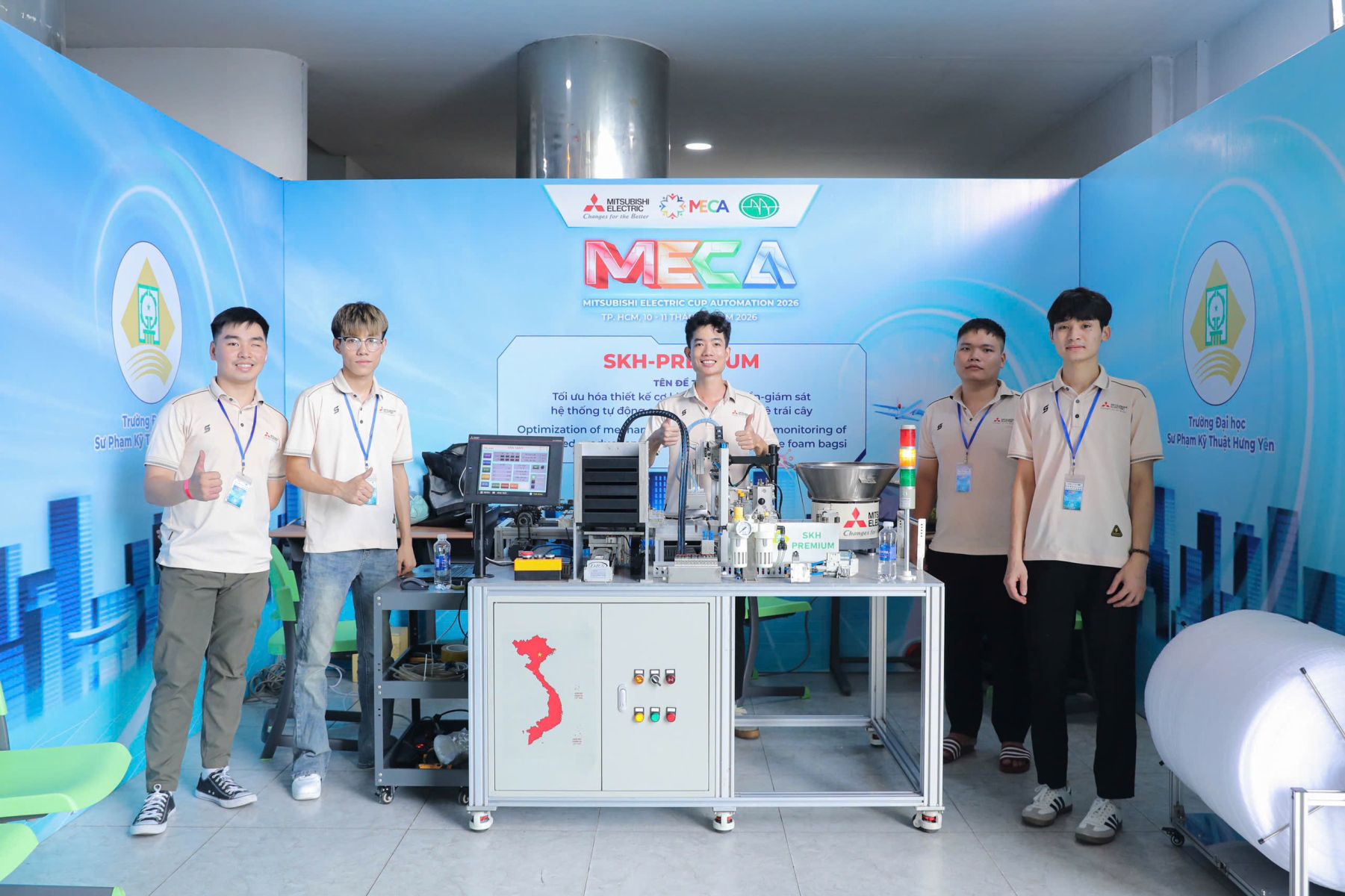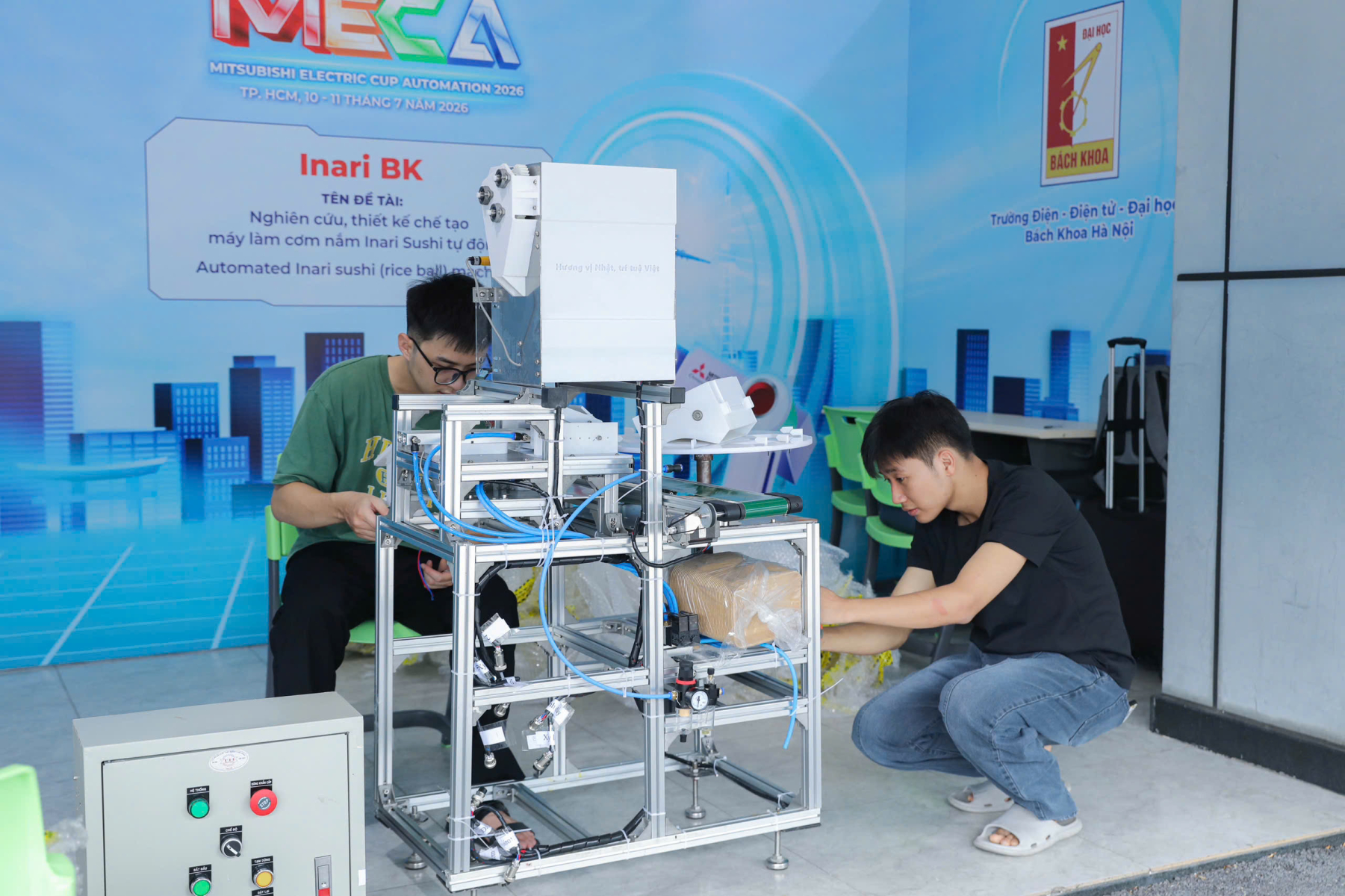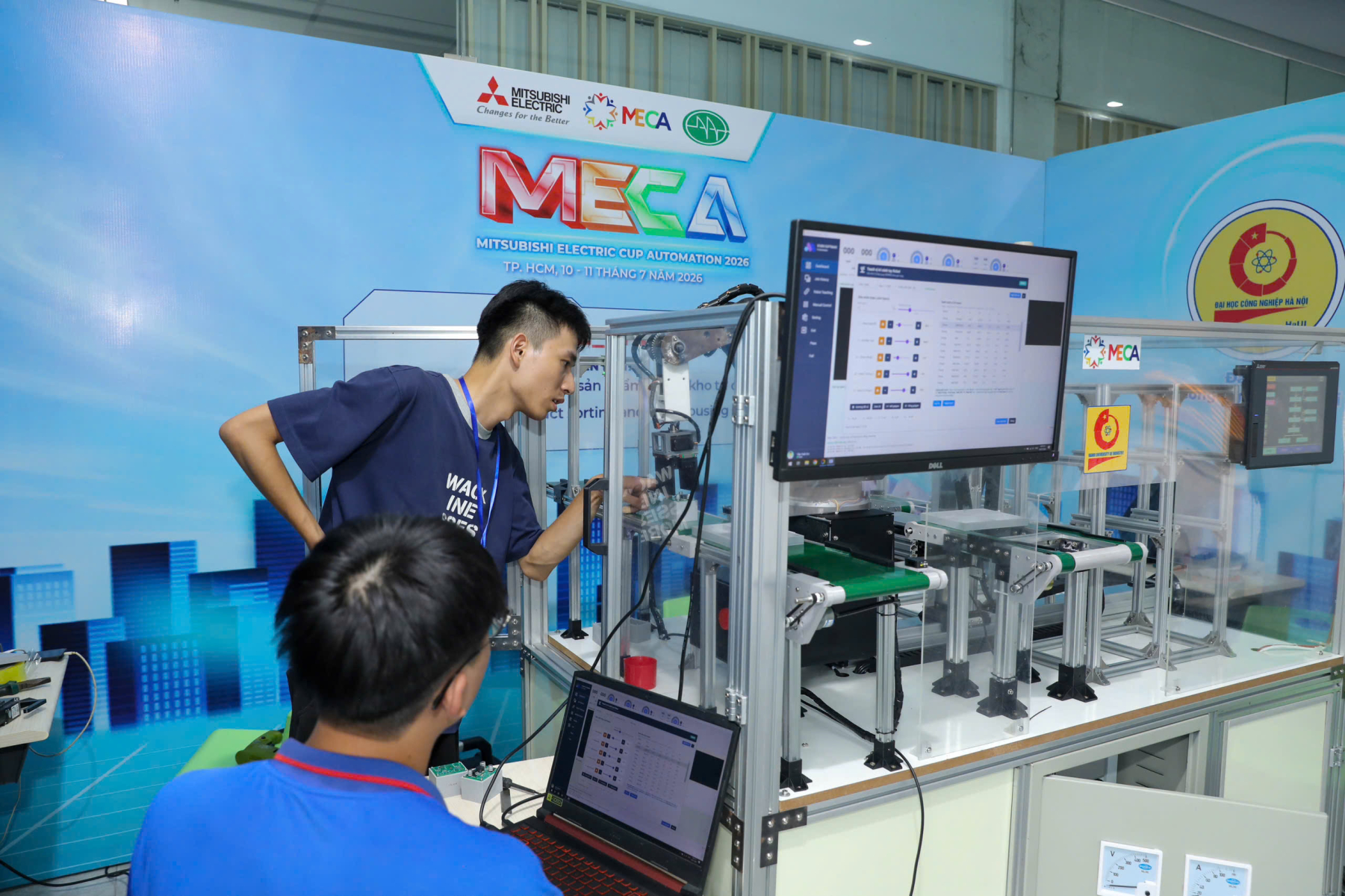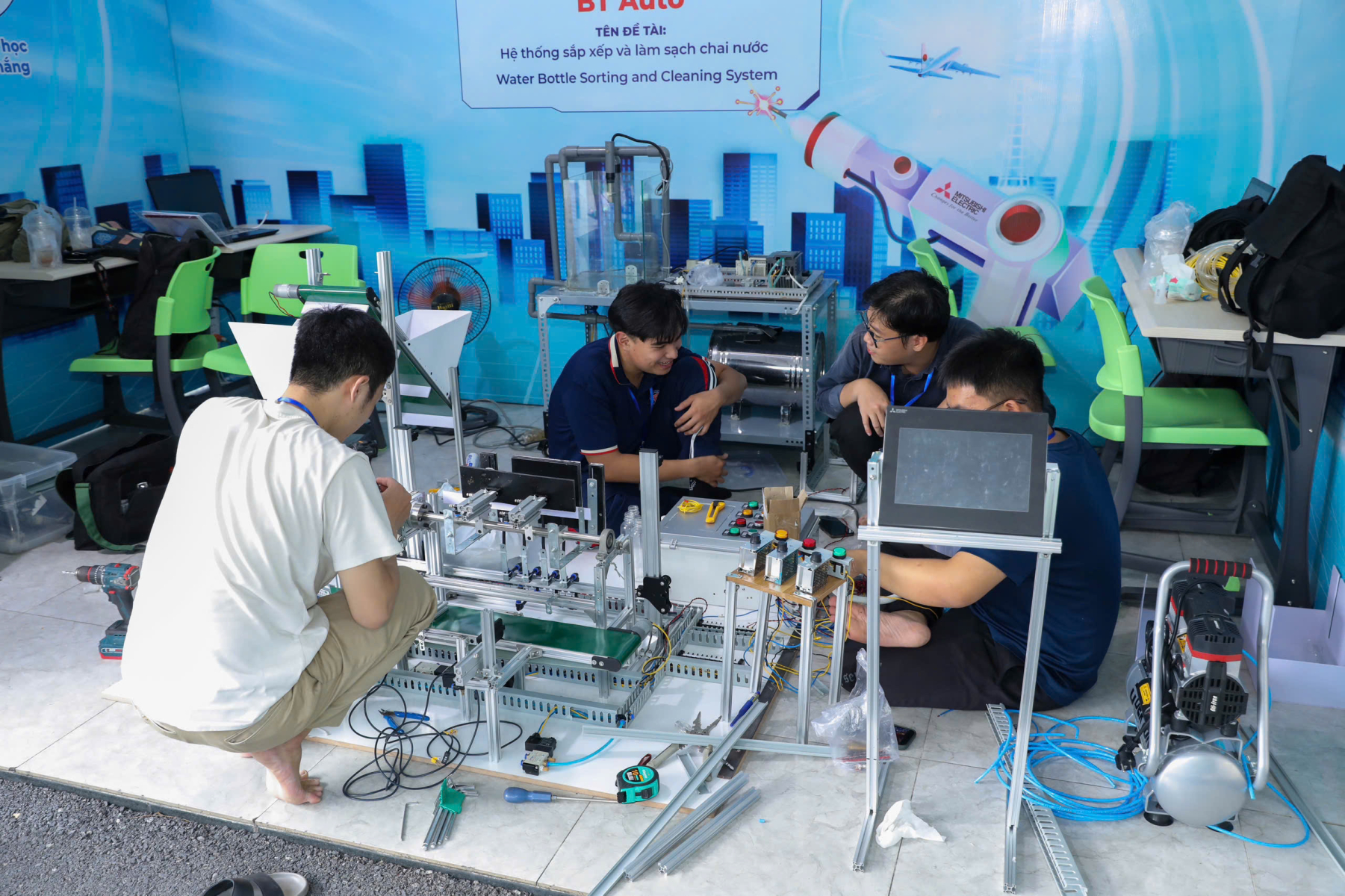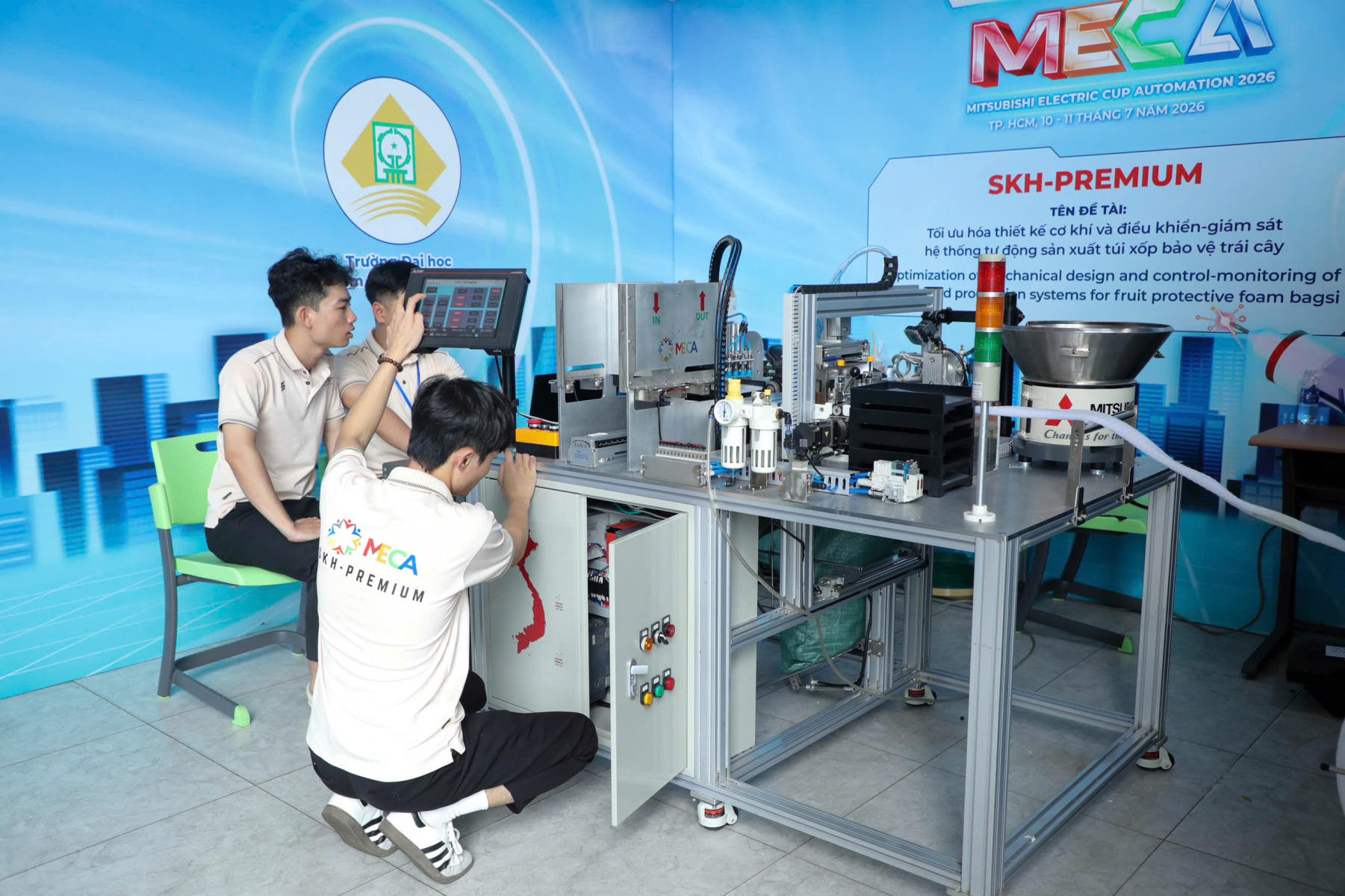


For the first time, the Industrial University of Ho Chi Minh City (IUH) hosted the MECA - Mitsubishi Electric Cup Automation 2026, bringing together 15 outstanding teams from universities across Vietnam. The teams showcased practical automation models and competed for the opportunity to represent Vietnam at the global finals in Japan.
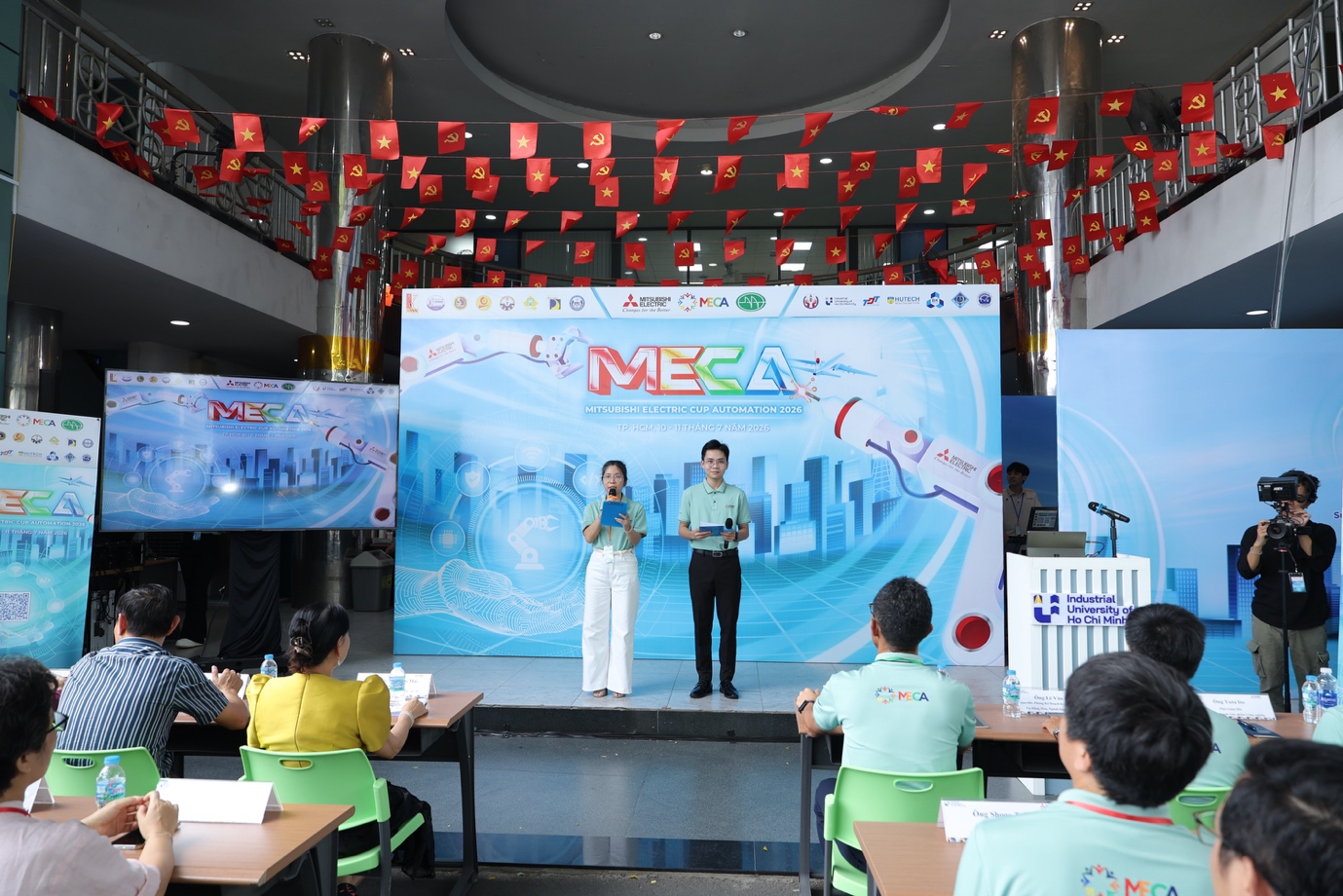
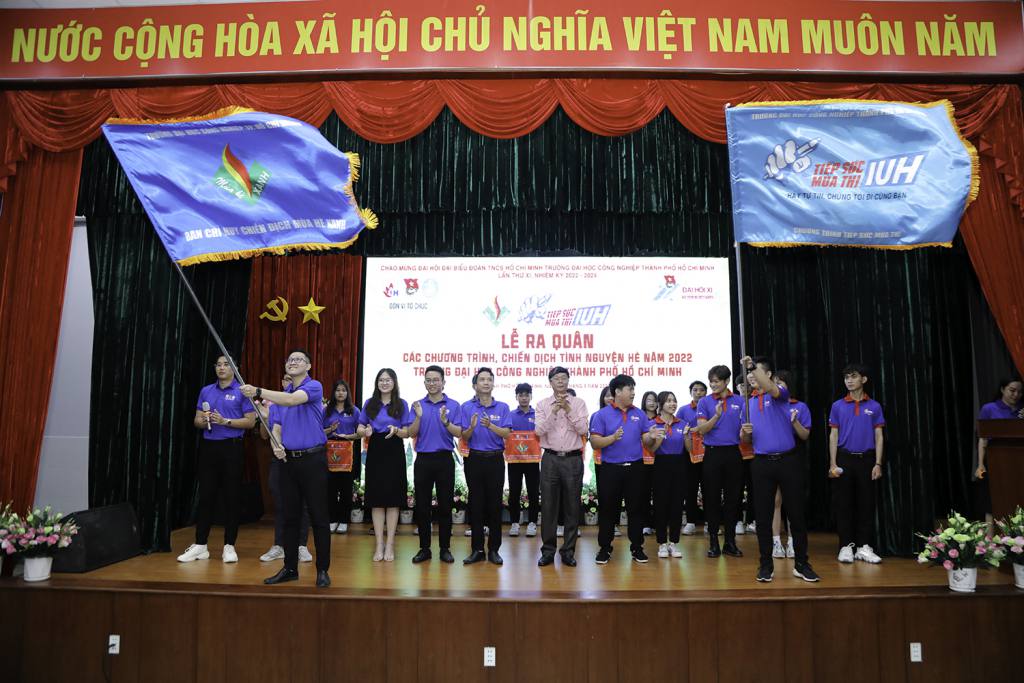
Opening ceremony of the National Semi-final Round of the MECA - Mitsubishi Electric Cup Vietnam 2026 at IUH.
On the morning of July 10, the Industrial University of Ho Chi Minh City hosted the National Semi-final Round of the MECA - Mitsubishi Electric Cup Vietnam 2026. This marks the first time that IUH has been selected by Mitsubishi Electric Vietnam as the host institution for this prestigious academic competition in automation, which brings together the 15 best teams from universities nationwide.
Speaking at the opening ceremony, Assoc. Prof. Dr. Đàm Sao Mai, Vice Rector of the Industrial University of Ho Chi Minh City, stated that being chosen by Mitsubishi Electric Vietnam to host this year's competition is a great honor for the University, particularly as the event coincides with IUH's 70th anniversary celebration (1956-2026).
Speaking at the opening ceremony, Assoc. Prof. Dr. Đàm Sao Mai, Vice Rector of the Industrial University of Ho Chi Minh City, stated that being chosen by Mitsubishi Electric Vietnam to host this year's competition is a great honor for the University, particularly as the event coincides with IUH's 70th anniversary celebration (1956-2026).
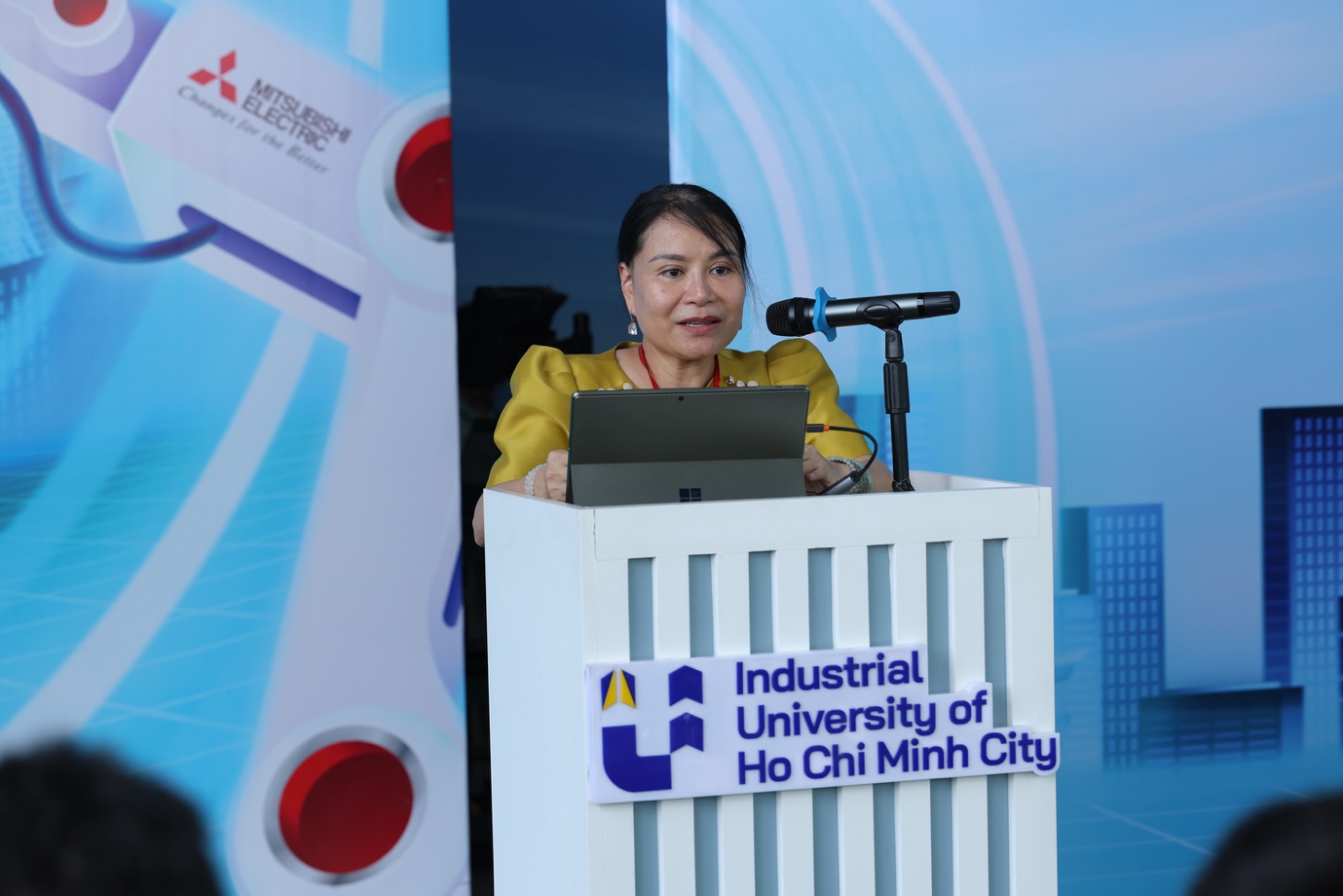
Assoc. Prof. Dr. Đàm Sao Mai, Vice Rector of the Industrial University of Ho Chi Minh City, delivers the opening remarks.
According to Assoc. Prof. Dr. Đàm Sao Mai, in the era of Industry 4.0 and rapid digital transformation, developing high-quality human resources requires more than theoretical instruction. Education must be closely connected to practical experience, innovation, and the solution of real industrial challenges. "The MECA competition provides a valuable opportunity for students to access advanced technologies, foster creativity, strengthen teamwork, and apply their knowledge to real-world situations. For IUH, collaboration with industry has always been one of our strategic priorities in developing engineers with strong professional competence, practical skills, and the adaptability required by modern industry," she emphasized.
Since 2020, MECA has experienced remarkable growth, expanding from a competition involving a single university to 15 participating universities in 2026. According to the organizing committee, this reflects the competition's growing influence as well as the increasing interest of universities and industry in automation and smart manufacturing.
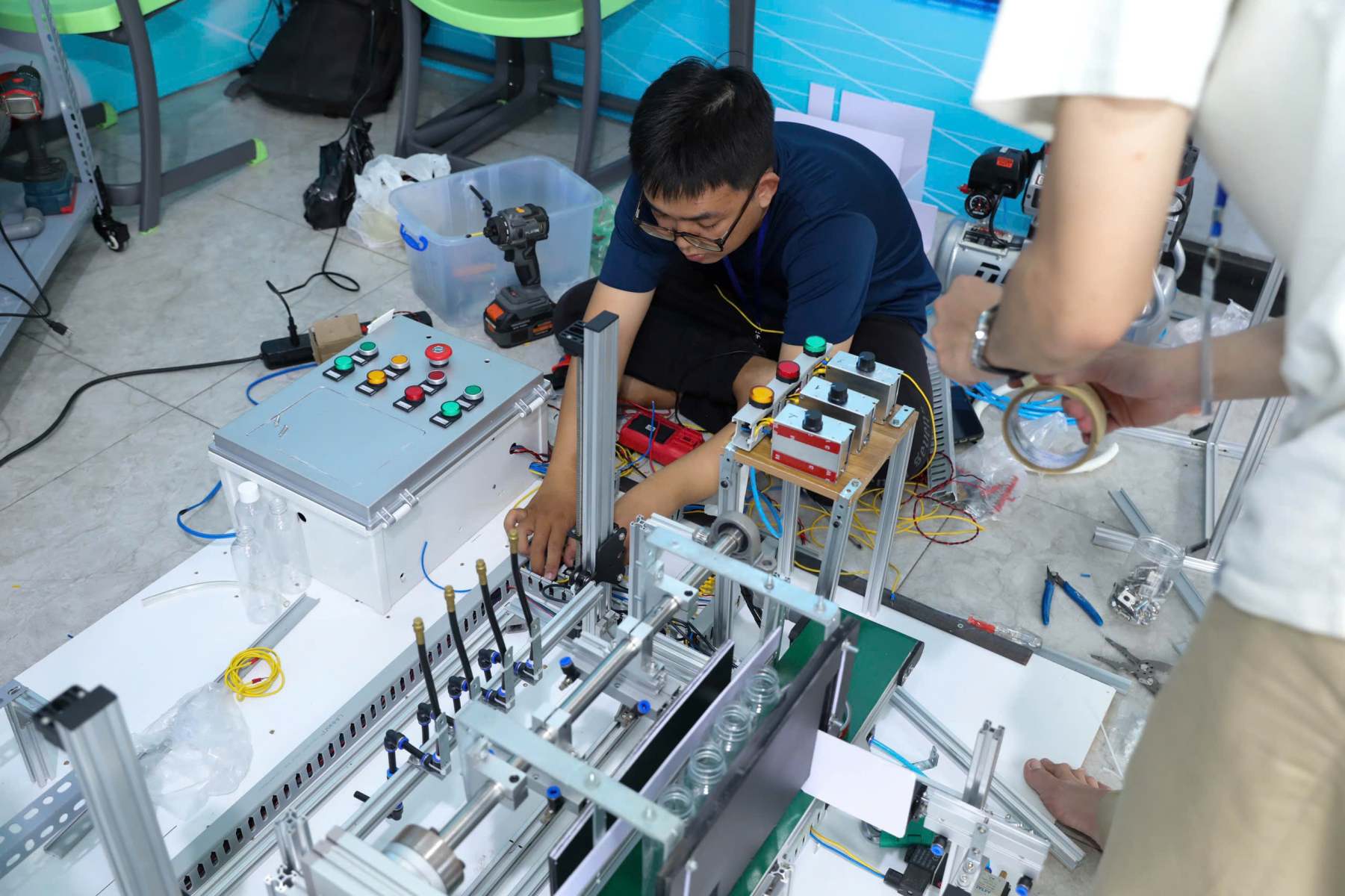
Unlike many competitions that focus primarily on ideas, MECA requires teams to demonstrate the practical applicability of their solutions through fully operational models. Each team is assigned a dedicated exhibition area to install, demonstrate, and operate its system before the judging panel. During each evaluation session, teams are given eight minutes to present their project and demonstrate the model, followed by four minutes to answer technical questions.
The competition also features a rigorous evaluation process. The judging panel consists of 18 members, including 15 faculty representatives from the participating universities, alongside representatives from Mitsubishi Electric Vietnam, the Vietnam Automation Association, and industry partners.
To ensure fairness and objectivity, the judges are divided into three groups that rotate among the competition booths. Each team presents its project to all three judging groups before receiving its final score.
Projects are evaluated not only for their originality but also for their potential for practical implementation. The judging criteria include five key aspects: innovation, feasibility, scalability, technical completeness, and operational reliability. Among these, feasibility carries the greatest weight, requiring teams to demonstrate not only creative ideas but also the effectiveness of their solutions in real manufacturing environments.
Before the on-site competition, all teams were required to submit an English-language project introduction video for preliminary evaluation by the technical committee. Each team also prepared a comprehensive project portfolio covering the project concept, system design, equipment specifications, business model, cost estimation, risk management plan, and proposals for improving Mitsubishi Electric automation products.
According to the organizing committee, this assessment approach enables students to experience the complete industrial project development process rather than focusing solely on building a prototype. In addition to technical expertise, participants are expected to demonstrate presentation skills, critical thinking, teamwork, and product development capabilities aligned with real industry needs.
This year's National Semi-final Round features 15 teams representing 15 universities from Northern, Central, and Southern Vietnam. On July 10, the teams compete for six places in the National Final, scheduled for July 11. The championship team will earn the right to represent Vietnam at the MECA Global competition, which is expected to be held in Japan at the end of August.
Highlights from the National Semi-final Round.