
Introduction
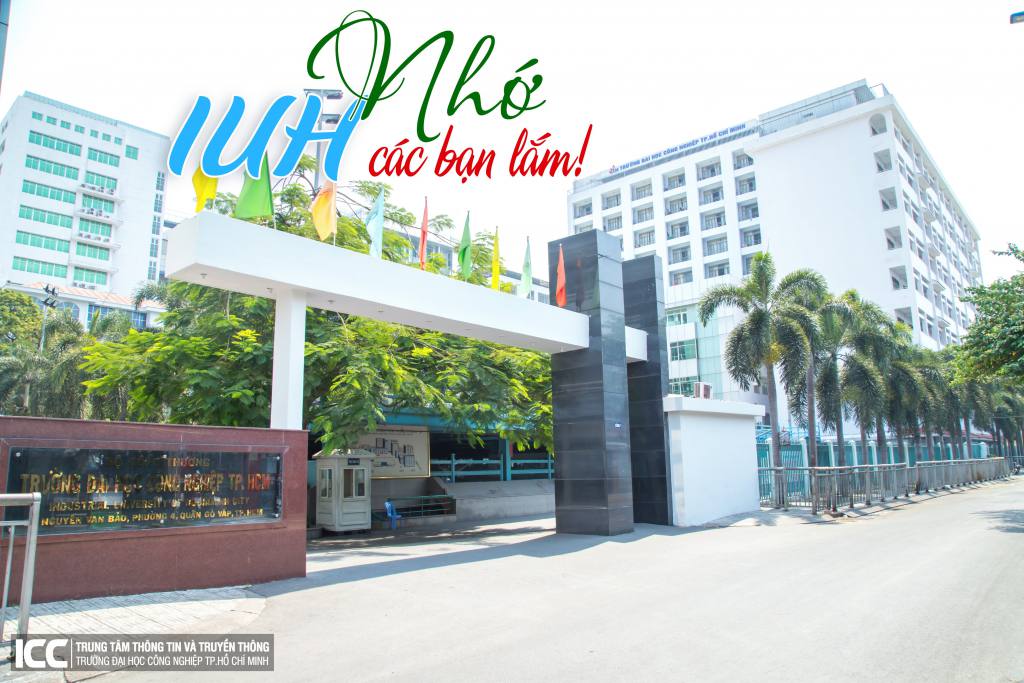
The Faculty of Chemical Engineering at the Industrial University of Ho Chi Minh City was established in 1994, originating from the Chemistry Division of Industrial Technical High School IV. In 1999, when the school was upgraded to Industrial College IV, the Chemistry Division was renamed the Faculty of Chemical Engineering. In 2004, when the institution became the Industrial University of Ho Chi Minh City, the Faculty was divided into two units: the Faculty of Chemical Engineering responsible for undergraduate education and the Chemical Technology Center responsible for college-level and lower programs. In 2011, these two units were merged again to form the present Faculty of Chemical Engineering, which is responsible for undergraduate and postgraduate education.
Objectives:
To train high-quality human resources capable of management, operation, production, scientific research, and technology transfer in the field of chemical engineering.
Human Resources:
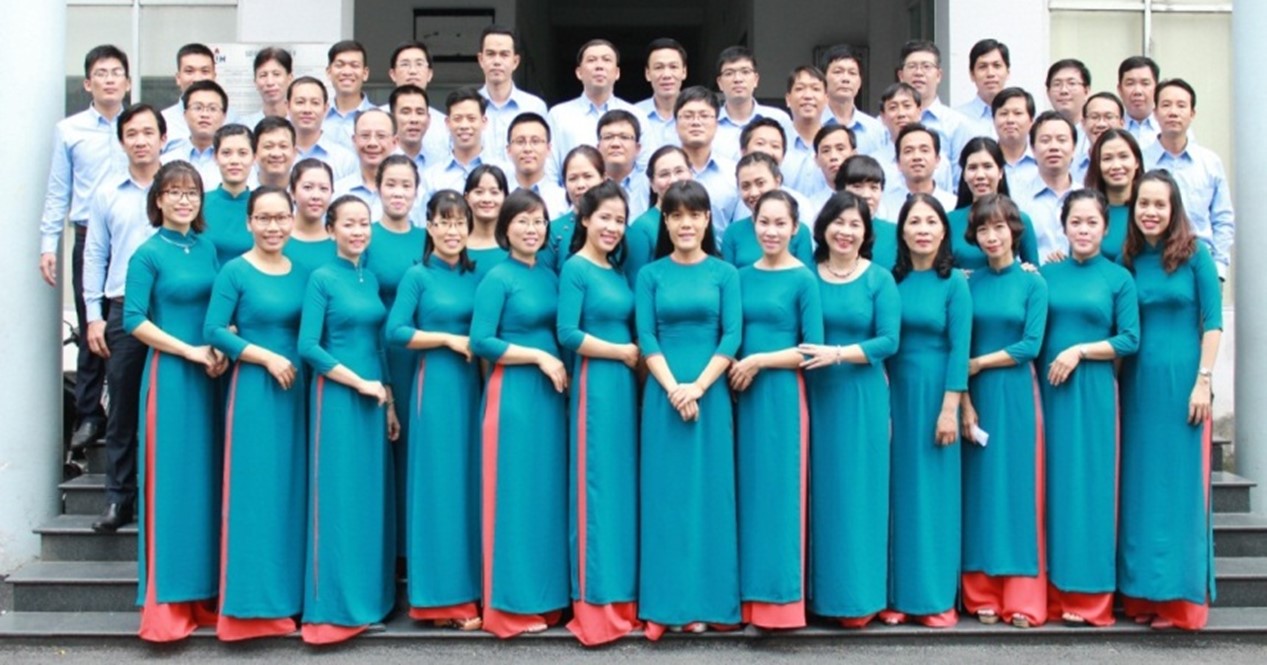
Total: 61 lecturers and staff members including 1 Professor, 5 Associate Professors, 30 PhDs, and 21 Master's degree holders and doctoral candidates.
Students: Since 2004, the Faculty has trained thousands of engineers in Chemical Engineering and Analytical Engineering as well as more than 100 master's graduates. Currently, the Faculty has approximately 1,500 students and postgraduate learners.
Departments:
-
Fundamental Sciences
-
Petrochemical Technology
-
Chemical Technology – Materials
-
Machinery and Equipment
-
Analytical Engineering
Training Programs:
-
Undergraduate program: Organic Chemical Technology, Inorganic Technology – Materials, Petrochemical Technology, and Analytical Chemical Engineering.
-
Postgraduate program: Master's programs in Chemical Engineering and Analytical Chemistry.
-
Doctoral programs in Chemical Engineering and Analytical Chemistry.
Facilities and Equipment:
The Faculty's laboratories are equipped by the University with many modern devices to support practical training and production applications. Additionally, equipment has been invested through international cooperation projects such as AFD, ADB, JICA, and WB.
Physical Chemistry Laboratory: Conducts physical chemistry experiments using PHYWE equipment.
Machinery and Equipment Laboratory: Equipped with state-of-the-art pilot-scale equipment, the best in Vietnam, funded by AFD (France).
Petrochemical Specialized Laboratory: Equipped with advanced analytical devices for petroleum products, supported by the University and the ADB project.
Analytical Chemistry Laboratory: Includes advanced analytical devices such as AAS, HPLC, GC, XRD, FT-IR, UV, provided by the University and supported by the JICA (Japan) project, serving the analytical and other specialized fields.
Chemical Technology Specialized Laboratory: Contains pilot-scale equipment designed to closely simulate production conditions at manufacturing plants.
Achievements:
Achievements: Over the development periods, the Faculty has achieved many accomplishments recognized by various authorities. Silver medals at the Education and Training Fair from 2006 to 2011; many lecturers awarded for excellent teaching at the university level; Eureka Student Scientific Research Awards: 2 first prizes at the university level in 2013 and 2015; 1 second prize in 2015 and 1 encouragement award at the City level; and many other individual honors. The Faculty was awarded the title of Excellent Labor Collective consecutively from 2011 to 2015. Certificates of merit from the Minister of Industry and Trade in 2013, 2014, and 2018. In 2016, the Faculty received a certificate of merit from the Prime Minister.
In 2018, the Chemical Engineering training program was accredited by the quality assurance organization of Southeast Asian universities (AUN-QA). In 2022, the Master's program in Analytical Chemistry was accredited and met the requirements of the Ministry of Education and Training.
International Cooperation:
The Faculty has established international cooperation with faculties offering Chemical Engineering training and related fields from many universities worldwide: Chulalongkorn University, Thammasat University (Thailand), University Malaysia Pahang (Malaysia), Changwon National University, Sungkyunkwan University, Kyung Hee University (South Korea), National Taiwan University, and Chung Yuan Christian University (Taiwan).
From 2012 to present, faculty members, students, and postgraduate learners have published 400 scientific research papers in domestic and international specialized journals, including approximately 500 papers indexed in SCI, SCE, and Scopus. Faculty members have conducted 50 research projects at various levels, including 2 Nafosted projects and 5 projects funded by ministries and provinces.