
Business challenges are entering university classrooms, while research outcomes are gaining new opportunities to move from laboratories to the marketplace.
On the morning of August 28, 2026, the Industrial University of Ho Chi Minh City (IUH) attended the signing ceremony of a Memorandum of Understanding (MoU) at Saigon Industry Corporation to implement the Corporation's program on science and technology development, innovation, and digital transformation.
On the morning of August 28, 2026, the Industrial University of Ho Chi Minh City (IUH) attended the signing ceremony of a Memorandum of Understanding (MoU) at Saigon Industry Corporation to implement the Corporation's program on science and technology development, innovation, and digital transformation.
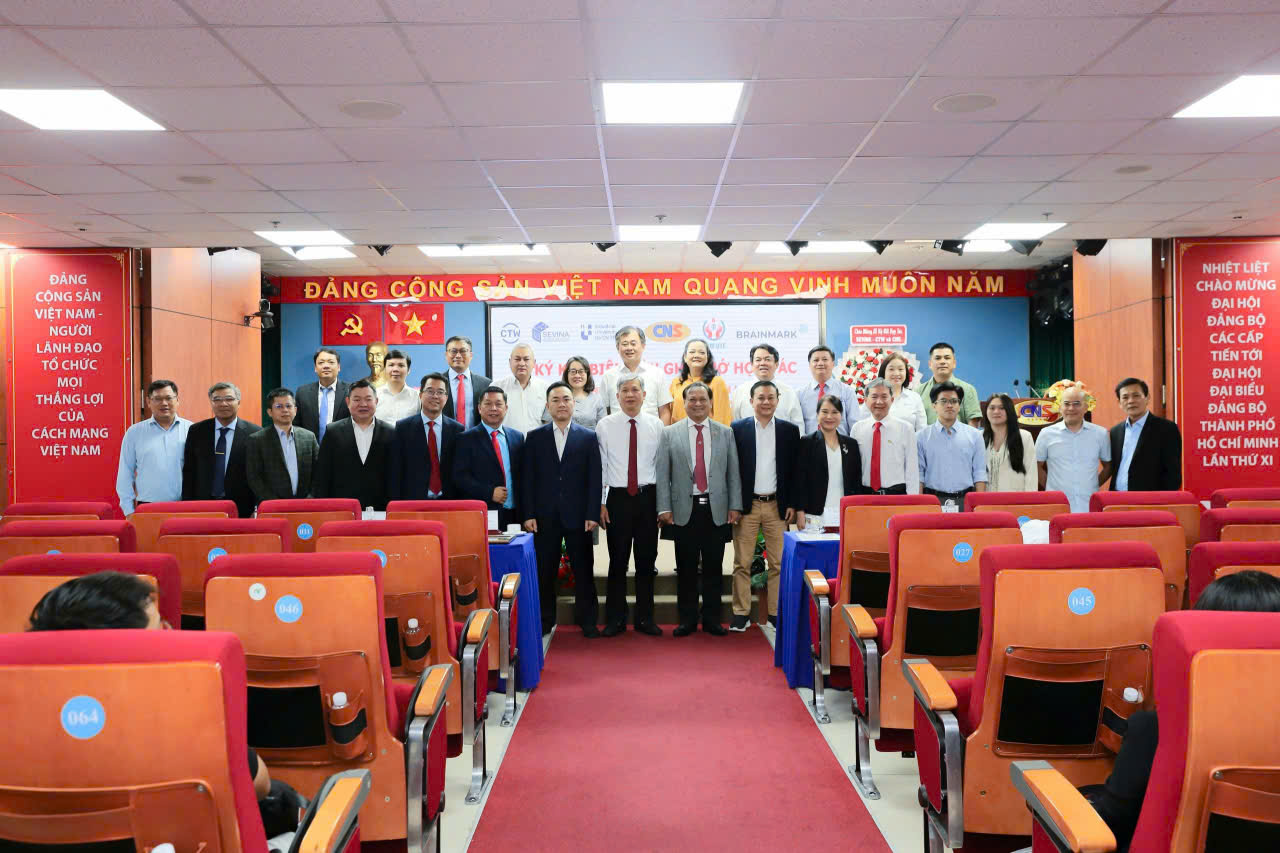
Signing ceremony of the Memorandum of Understanding for the implementation of Saigon Industry Corporation's program on science and technology development, innovation, and digital transformation.
The event was attended by Mr. Nguyễn Tiến Hưng, Deputy Director of the National Center for Semiconductor Chip Pilot Production Support under the Authority of Digital Technology and Artificial Intelligence, Ministry of Science and Technology; Mr. Hà Văn Út, Member of the Ho Chi Minh City Party Committee and Deputy Director of the Ho Chi Minh City Department of Industry and Trade; and Mr. Nguyễn Hứa Huyền Như, Deputy Head of the Corporate Finance Sub-department under the Ho Chi Minh City Department of Finance.
Representing IUH was Assoc. Prof. Dr. Đàm Sao Mai, Vice Rector. The event also brought together representatives from universities, institutes, training centers, businesses, and partners in the industrial and technology sectors.
As science and technology, innovation, and digital transformation play an increasingly important role in improving productivity, quality, and competitiveness, the need for stronger connections among businesses, universities, research institutes, and technology organizations has become more evident.
As one of Ho Chi Minh City's key state-owned corporations, Saigon Industry Corporation has identified production modernization, adopting advanced technologies, and optimizing management models as key development priorities. Expanding cooperation with partners with strong capabilities in education, research, and technology is therefore expected to provide additional resources to bring appropriate solutions and research outcomes into the Corporation's operations and those of its member companies.
Against this backdrop, the Industrial University of Ho Chi Minh City was among the institutions signing an MoU with Saigon Industry Corporation at the event.
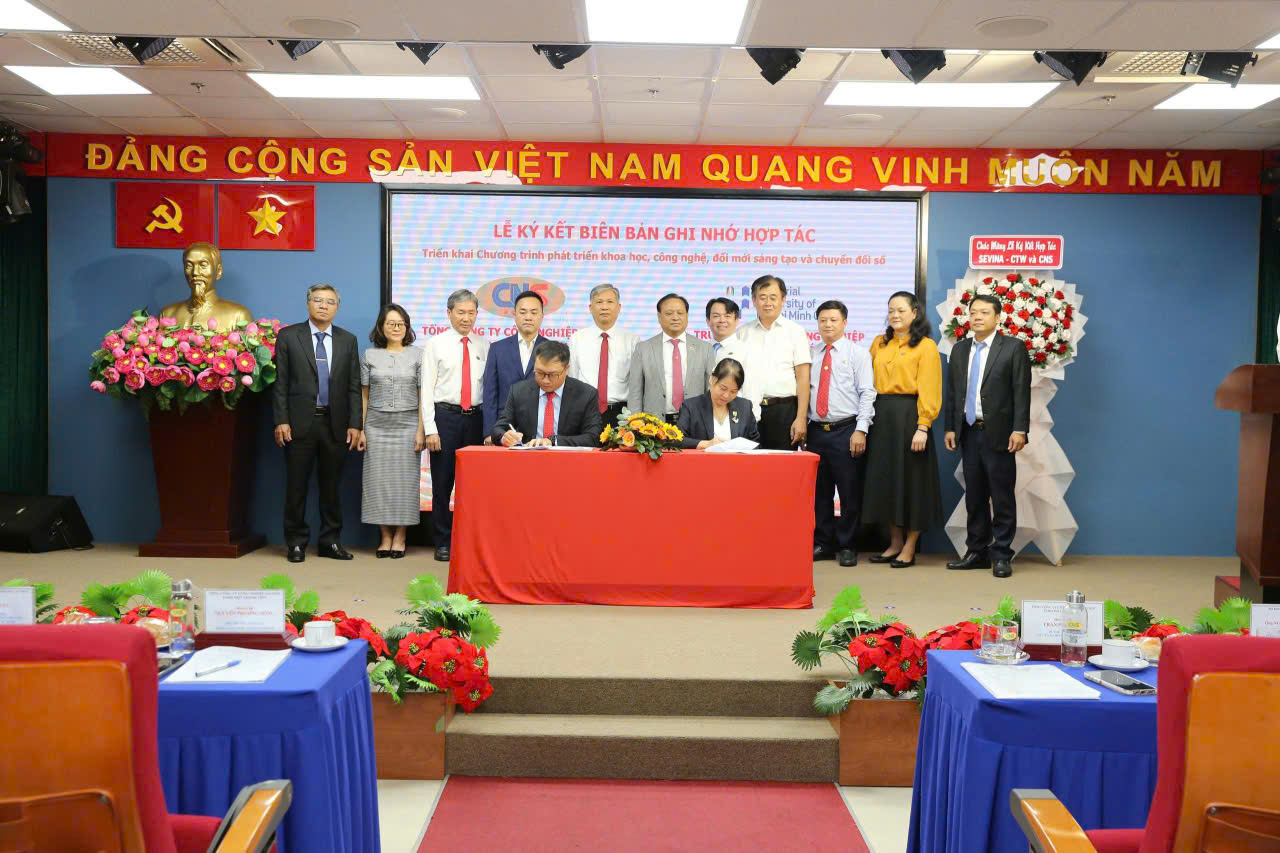
Representatives of IUH and Saigon Industry Corporation signing the Memorandum of Understanding.
Under the MoU, the two sides will promote research cooperation and the development of industrial and high-tech products; collaborate in education and human resource development; expand employment opportunities; and strengthen connections between students and businesses. They will also identify and exchange technology transfer opportunities while promoting the commercialization of research outcomes and products.
Assoc. Prof. Dr. Đàm Sao Mai, Vice Rector of IUH, noted that stronger connections with major industrial enterprises in Ho Chi Minh City would create additional opportunities to align the University's strengths in education and research with practical industry needs.
"An important goal of these cooperation agreements is to develop concrete programs through which research can address business needs, and students can gain greater exposure to technology and real-world production environments," Assoc. Prof. Dr. Đàm Sao Mai shared.
Assoc. Prof. Dr. Đàm Sao Mai, Vice Rector of IUH, noted that stronger connections with major industrial enterprises in Ho Chi Minh City would create additional opportunities to align the University's strengths in education and research with practical industry needs.
"An important goal of these cooperation agreements is to develop concrete programs through which research can address business needs, and students can gain greater exposure to technology and real-world production environments," Assoc. Prof. Dr. Đàm Sao Mai shared.
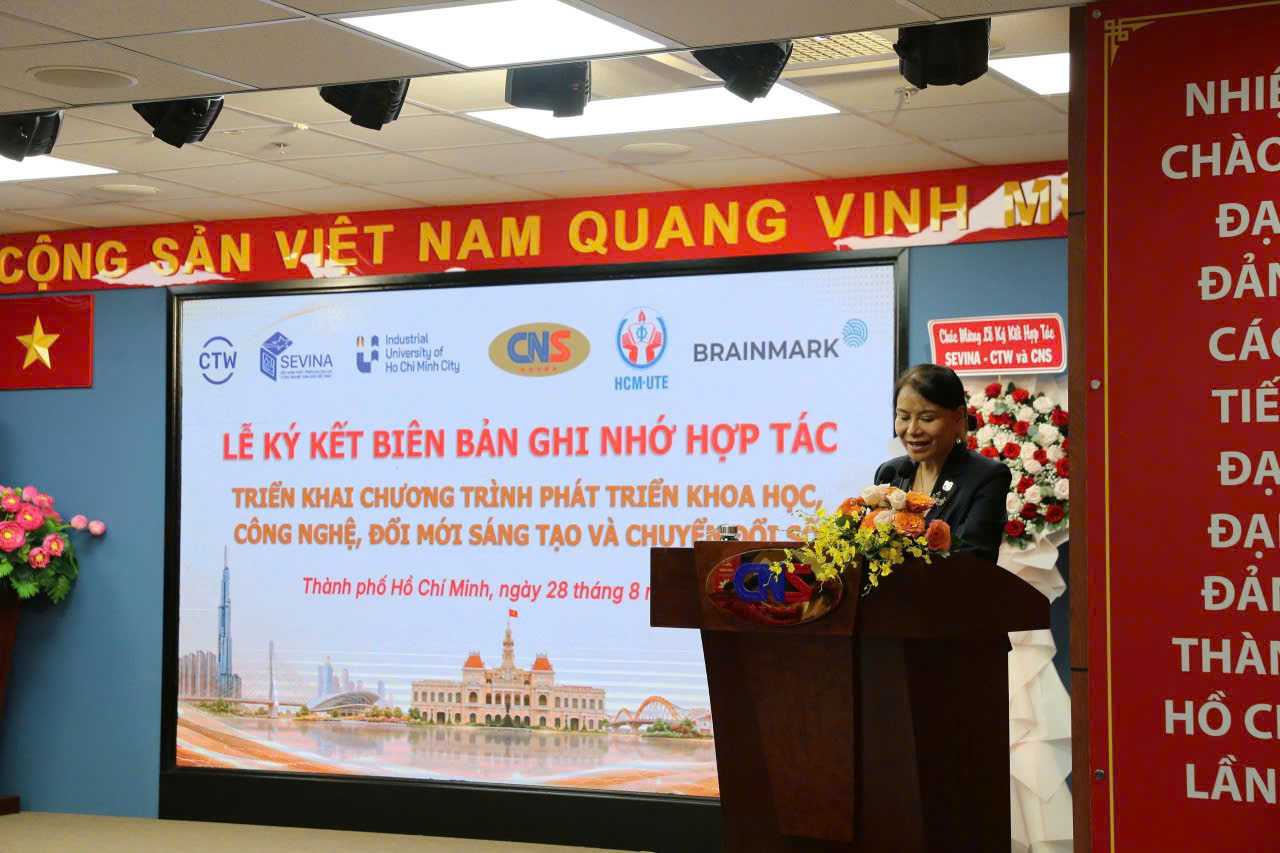
Assoc. Prof. Dr. Đàm Sao Mai, Vice Rector of IUH, speaking at the event.
A notable aspect of the MoU is that cooperation extends beyond human resource development to include research, product development, and technology transfer. Businesses can bring real-world needs and challenges into research and education. At the same time, the University can give students and lecturers greater exposure to technologies, production processes, and real professional requirements. This also creates pathways for scientific research outcomes to move from laboratories into practical applications through testing, refinement, technology transfer, and commercialization.
According to Assoc. Prof. Dr. Đàm Sao Mai, university-industry cooperation not only creates more employment opportunities for students but also helps academic programs remain closely aligned with labor market needs.
"We hope that partnerships like this will create value for both sides: businesses can find suitable human resources, while students have opportunities to learn from real-world challenges and technologies," she said.
Beyond strengthening university-industry connections, the program also placed the partnership within the context of emerging technological and workforce demands, particularly in artificial intelligence and semiconductors.
From an industry perspective, Mr. Triệu Hiệp Lộc, Chairman and Chief Executive Officer of CTW Technology Joint Stock Company, presented perspectives on Ho Chi Minh City's human resource development strategy. Meanwhile, Mr. Vũ Ngọc Nam, Deputy General Director of Saigon Industry Corporation, discussed the development of Ho Chi Minh City's semiconductor ecosystem, practical experience, and mechanisms to strengthen cooperation among universities, businesses, and government agencies.
Alongside IUH, Saigon Industry Corporation also signed MoUs with partners in semiconductor workforce development, chip design, digital transformation, artificial intelligence, the Internet of Things, renewable energy, and innovation.
For IUH, the MoU strengthens connections with Ho Chi Minh City's industrial sector and provides a foundation for both sides to develop concrete initiatives in education, research, and technology transfer. More importantly, partnerships like this give students greater access to real-world business environments, help the University better understand labor market needs, and provide businesses with a valuable partner to develop human resources and jointly address practice-based technological challenges.