
The gap between the classroom and the factory becomes much shorter when students learn using the very technologies employed in modern industry. The Siemens Automation Laboratory, newly launched at the Industrial University of Ho Chi Minh City (IUH), not only provides a state-of-the-art hands-on learning environment but also reinforces the University's commitment to practice-oriented education closely aligned with industrial production.
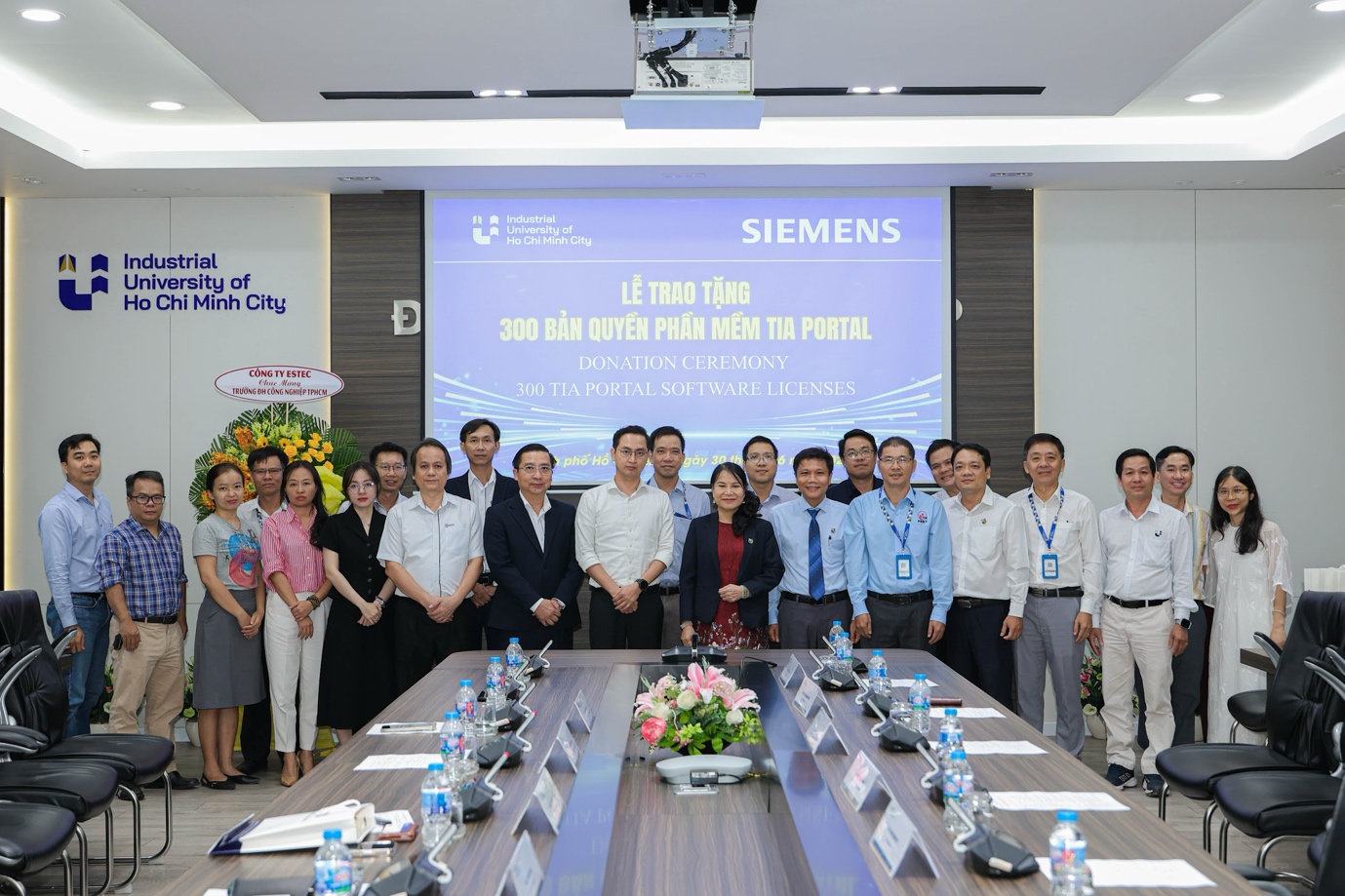
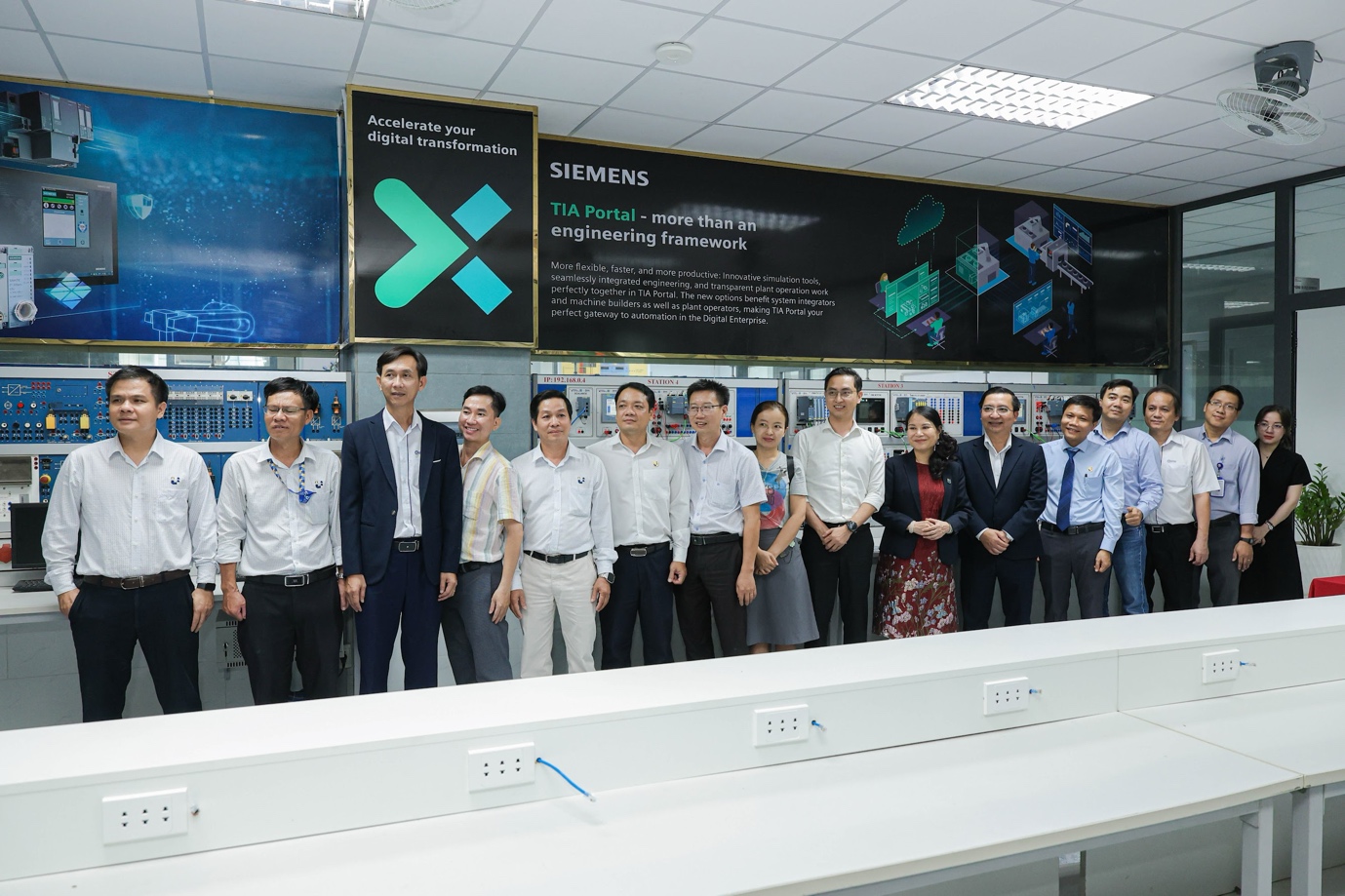
On the afternoon of June 30, the Industrial University of Ho Chi Minh City officially inaugurated the Siemens Automation Laboratory and received a package of licensed software donated by Siemens Vietnam. The event marks another milestone in the University's strategy to strengthen collaboration with industry and bridge the gap between the classroom and the factory floor.
On the afternoon of June 30, the Industrial University of Ho Chi Minh City officially inaugurated the Siemens Automation Laboratory and received a package of licensed software donated by Siemens Vietnam. The event marks another milestone in the University's strategy to strengthen collaboration with industry and bridge the gap between the classroom and the factory floor.
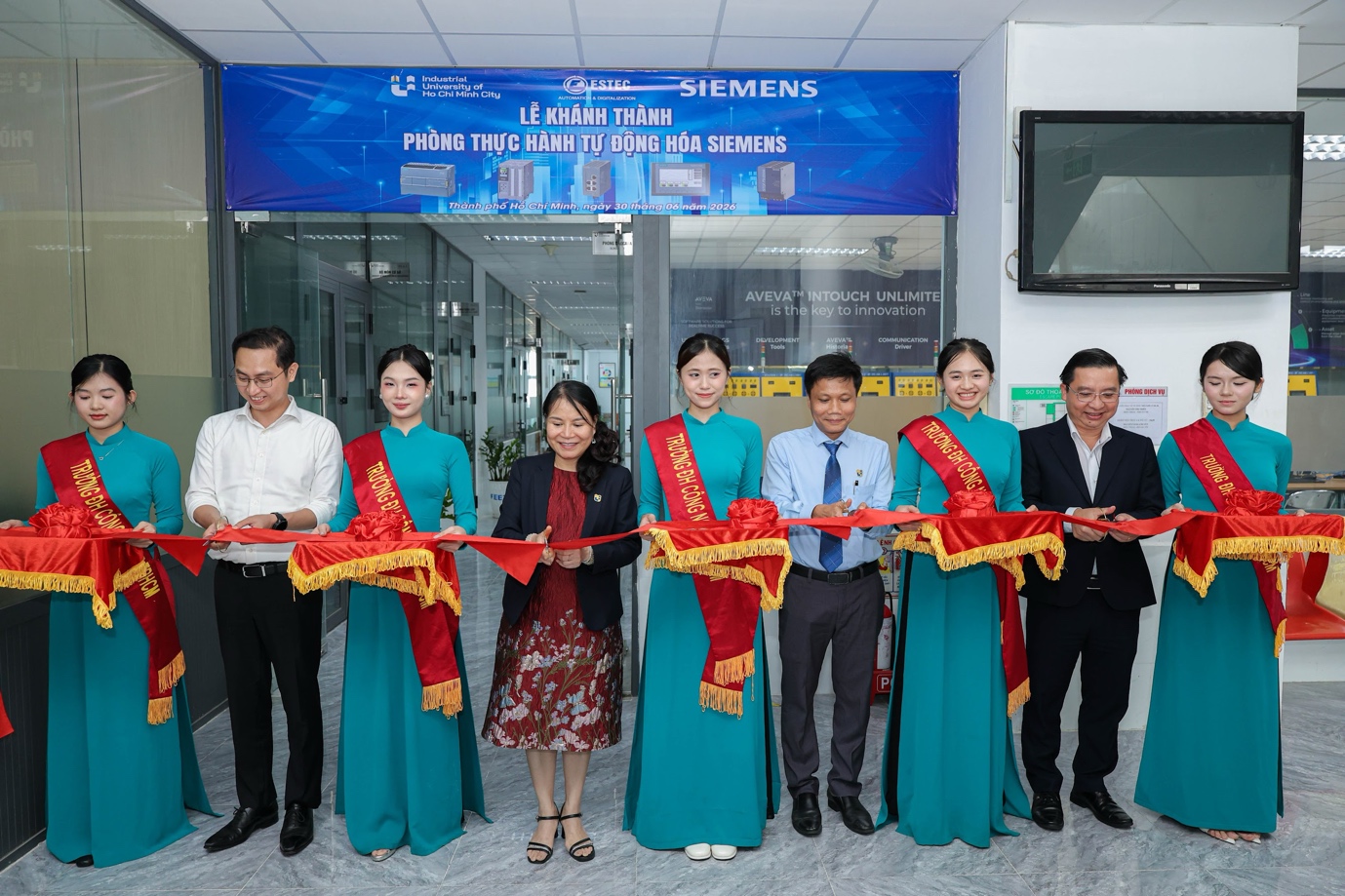
Inauguration ceremony of the Siemens Automation Laboratory at IUH.
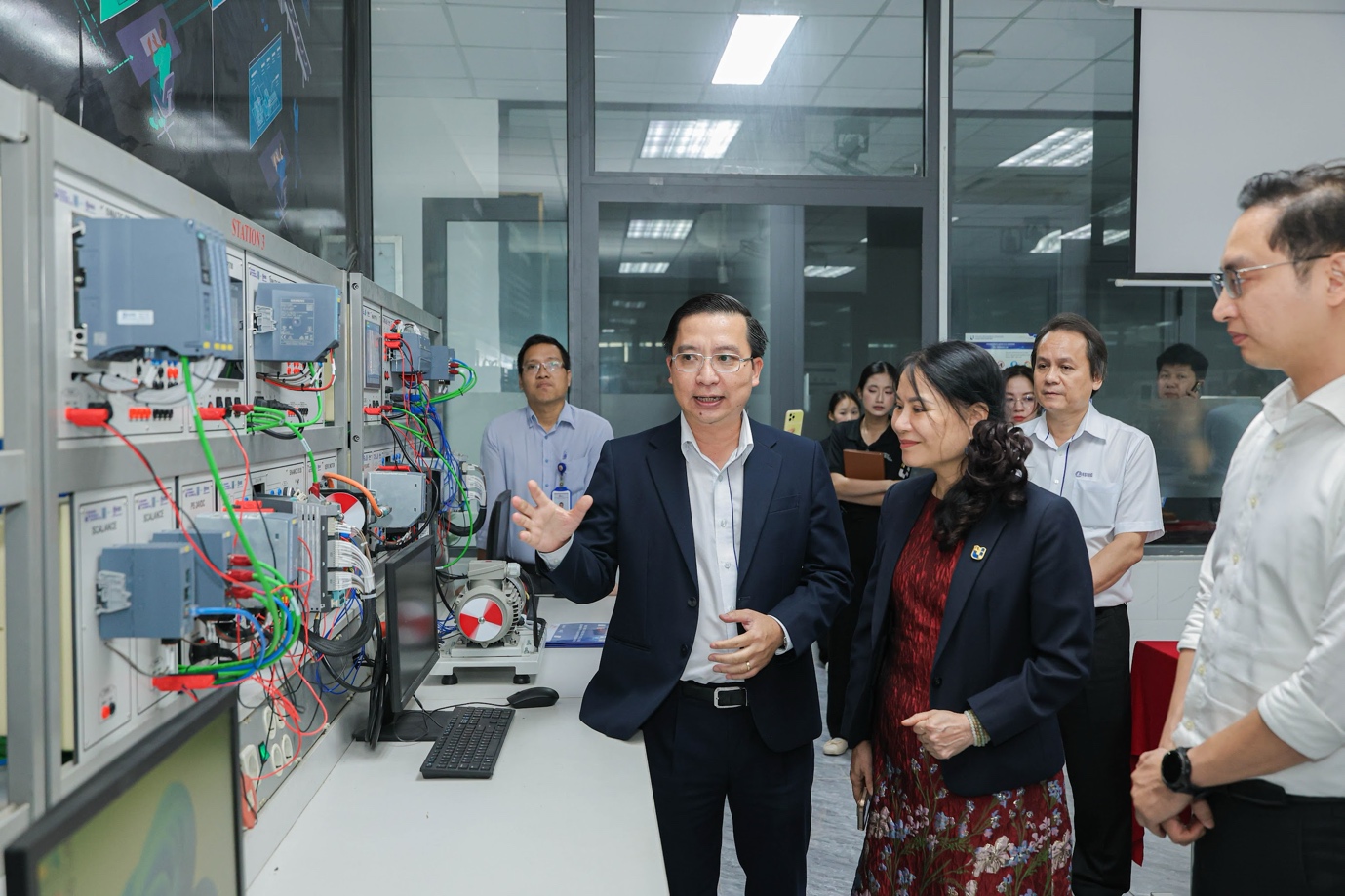
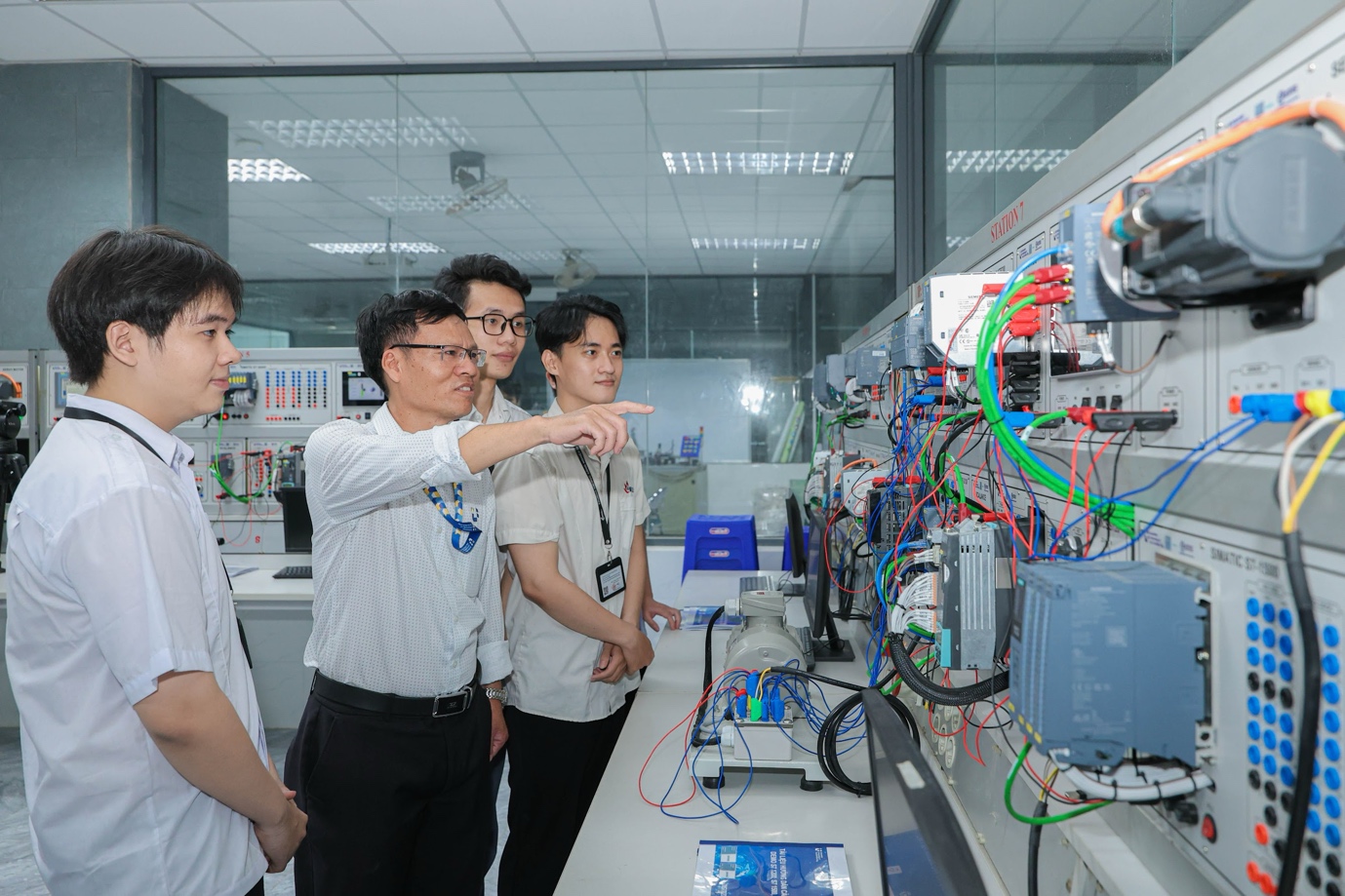
What distinguishes the laboratory is not its size, but its ability to replicate a modern industrial production environment. It is fully equipped with Siemens automation technologies, including S7-1500 PLCs, S7-1200 PLCs, ET200 distributed I/O systems, variable frequency drives, servo systems, HMI devices, and widely used industrial communication protocols. These are the same technologies currently deployed across numerous manufacturing and automation enterprises.
In addition to the hardware, Siemens donated 300 licensed TIA Portal software licenses. With this integrated ecosystem, students can program, simulate, configure, and test automation systems on a unified platform, enabling learning experiences that closely reflect real-world industrial requirements.
According to Assoc. Prof. Dr. Đàm Sao Mai, Vice Rector of the Industrial University of Ho Chi Minh City, collaboration between universities and industry goes beyond equipment sponsorship. More importantly, it provides students with opportunities to access advanced technologies while they are still at university, thereby enhancing their practical competencies, adaptability, and competitiveness after graduation.
In addition to the hardware, Siemens donated 300 licensed TIA Portal software licenses. With this integrated ecosystem, students can program, simulate, configure, and test automation systems on a unified platform, enabling learning experiences that closely reflect real-world industrial requirements.
According to Assoc. Prof. Dr. Đàm Sao Mai, Vice Rector of the Industrial University of Ho Chi Minh City, collaboration between universities and industry goes beyond equipment sponsorship. More importantly, it provides students with opportunities to access advanced technologies while they are still at university, thereby enhancing their practical competencies, adaptability, and competitiveness after graduation.
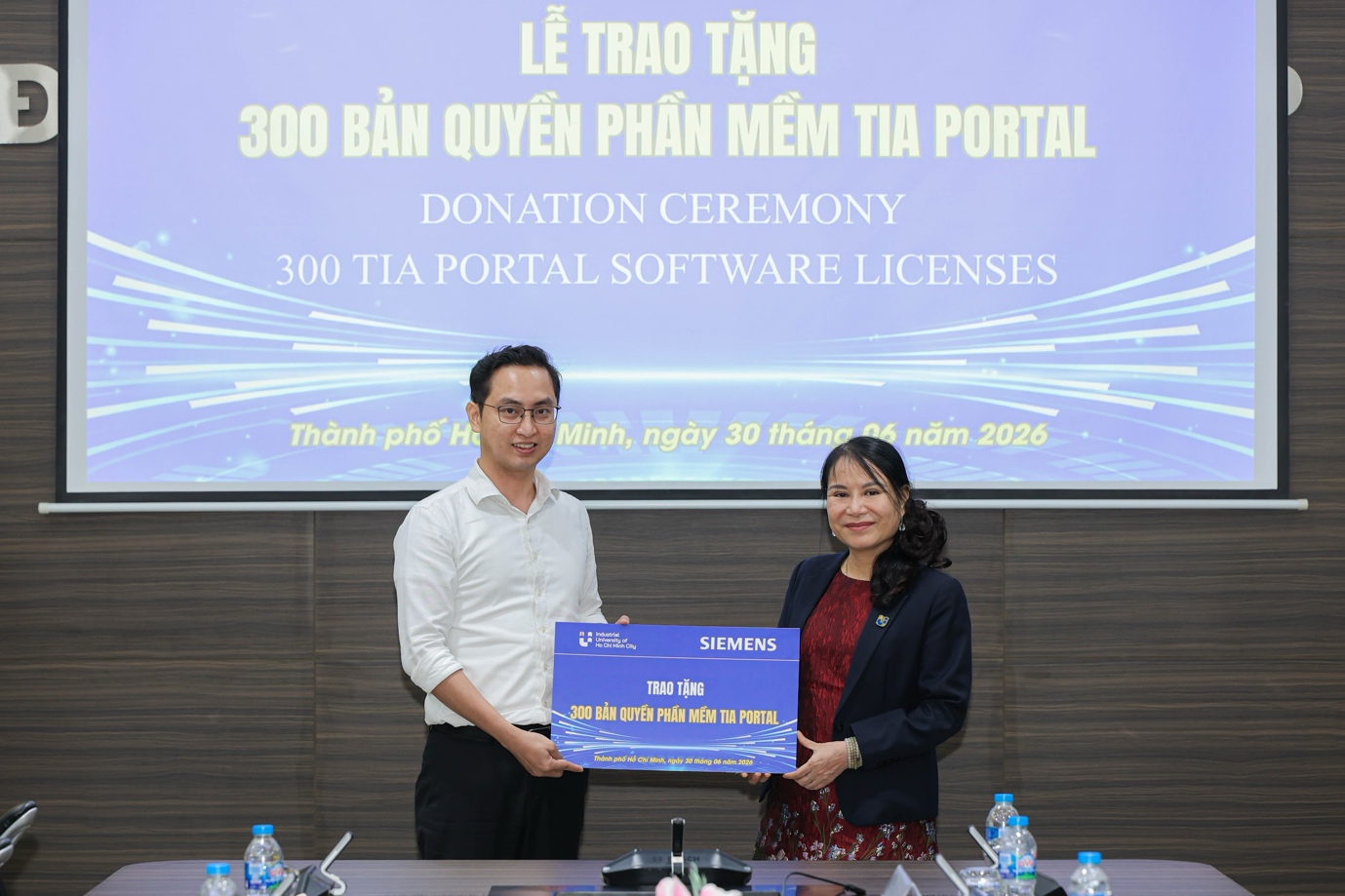
Assoc. Prof. Dr. Đàm Sao Mai, Vice Rector of the University, received the TIA Portal software package from representatives of Siemens Vietnam.
As digital transformation and smart manufacturing continue to reshape industries, businesses increasingly require graduates who possess not only solid theoretical knowledge but also strong technological competencies. Enterprise-standard laboratories therefore play a vital role in transforming engineering education.
Representing Siemens Vietnam, Mr. Tran Vinh Thanh, Business Development Director, emphasized that investment in education has always been one of the company's strategic priorities. Technology can only create real value when supported by a workforce capable of utilizing, operating, and continuously advancing it. Therefore, partnering with universities is also an investment in the sustainable development of industry.
As the project's technology partner, ESTEC was responsible for integrating the equipment and developing laboratory models for teaching and training. According to the company, these training systems will enable students to gain more intuitive experience with PLC programming, HMI operation, variable-frequency drive control, and motion control, while also helping lecturers incorporate the latest industrial technologies into their curricula.
For many years, the Industrial University of Ho Chi Minh City has consistently pursued an industry-integrated education model. From curriculum development and laboratory investment to collaborative projects with enterprises, the University's ultimate objective is to ensure that graduates can quickly adapt to professional working environments.
The establishment of the Siemens Automation Laboratory not only provides engineering students with another advanced practical training facility but also demonstrates the University's commitment to practice-centered education, in which universities and industry jointly share responsibility for developing a highly qualified workforce for the digital industrial era.
Representing Siemens Vietnam, Mr. Tran Vinh Thanh, Business Development Director, emphasized that investment in education has always been one of the company's strategic priorities. Technology can only create real value when supported by a workforce capable of utilizing, operating, and continuously advancing it. Therefore, partnering with universities is also an investment in the sustainable development of industry.
As the project's technology partner, ESTEC was responsible for integrating the equipment and developing laboratory models for teaching and training. According to the company, these training systems will enable students to gain more intuitive experience with PLC programming, HMI operation, variable-frequency drive control, and motion control, while also helping lecturers incorporate the latest industrial technologies into their curricula.
For many years, the Industrial University of Ho Chi Minh City has consistently pursued an industry-integrated education model. From curriculum development and laboratory investment to collaborative projects with enterprises, the University's ultimate objective is to ensure that graduates can quickly adapt to professional working environments.
The establishment of the Siemens Automation Laboratory not only provides engineering students with another advanced practical training facility but also demonstrates the University's commitment to practice-centered education, in which universities and industry jointly share responsibility for developing a highly qualified workforce for the digital industrial era.