

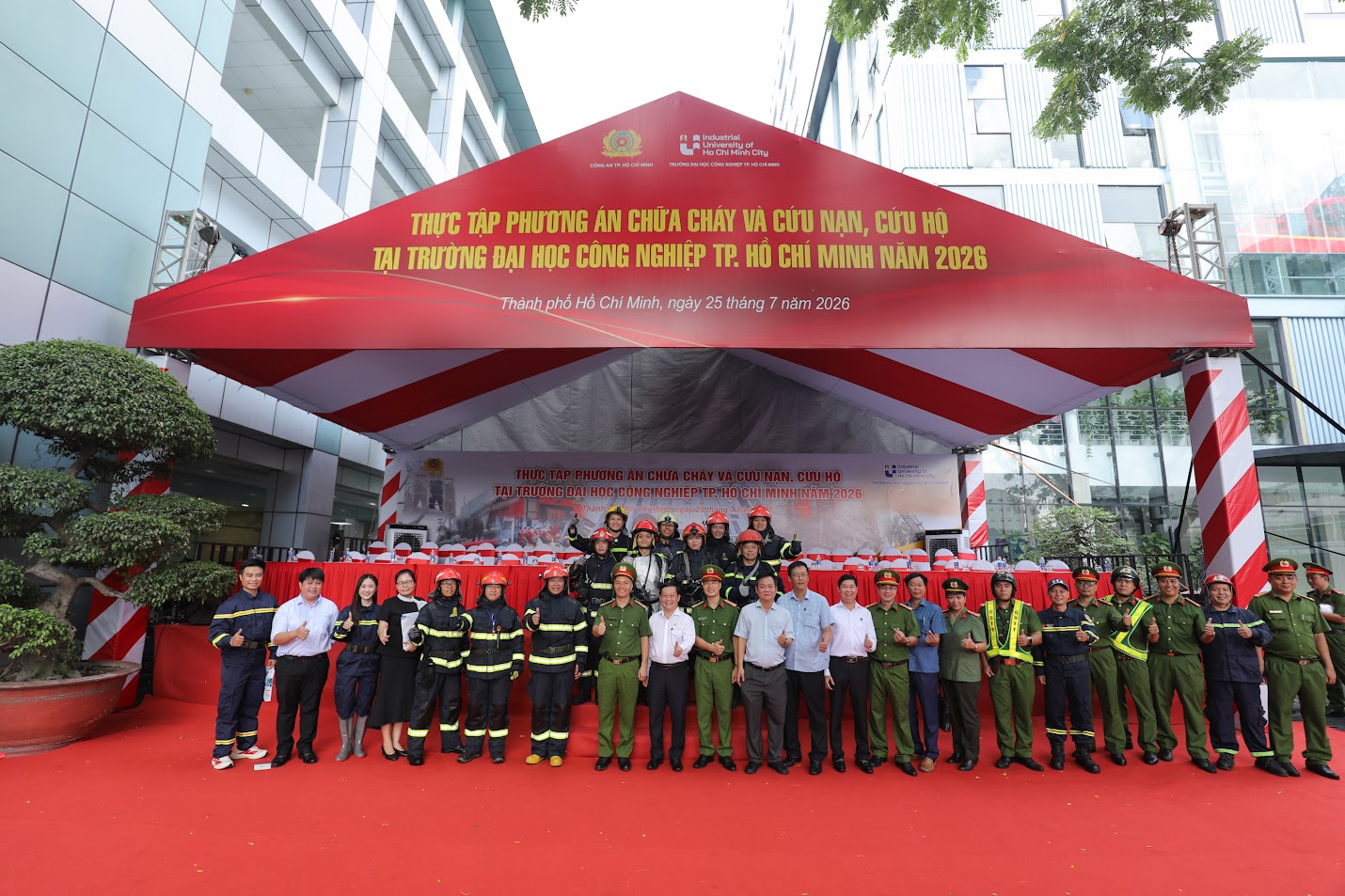
More than 200 people participated in evacuation procedures as multiple emergency response forces coordinated to manage a dual-fire scenario involving an underground parking garage and a high-rise academic building during a city-level fire prevention, firefighting, rescue, and emergency response drill held on July 25 at the Industrial University of Ho Chi Minh City (IUH).
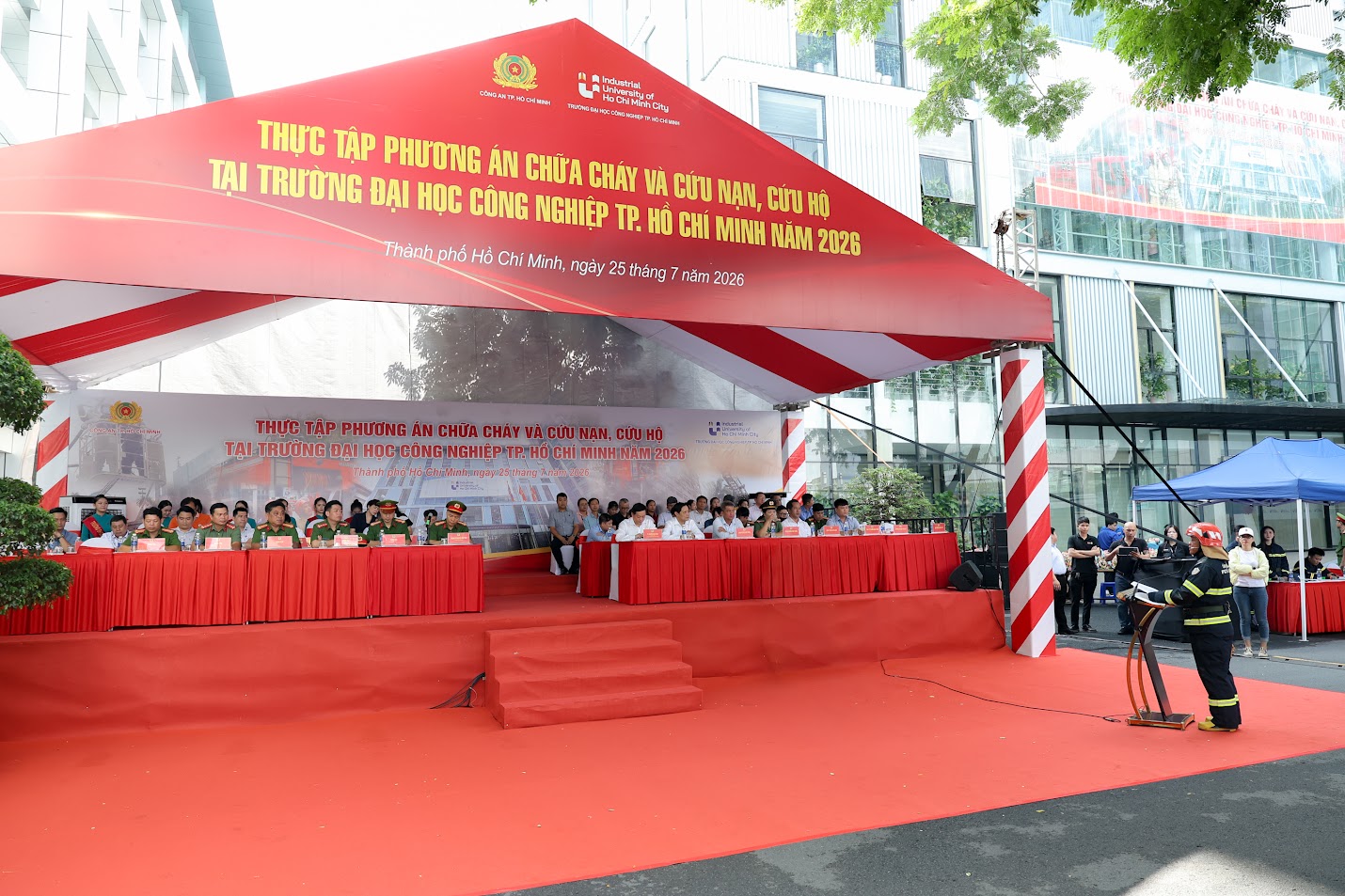
The Fire Prevention, Firefighting and Rescue Police Division (PC07) under the Ho Chi Minh City Police, in coordination with the Industrial University of Ho Chi Minh City and relevant agencies, organized the large-scale fire and rescue drill
The sound of the fire alarm echoed throughout the campus as the public address system repeatedly instructed everyone to remain calm and evacuate via designated emergency exits. Within minutes, people in the underground parking area and throughout Building A followed the guidance of the University's on-site fire safety team and safely exited the danger zone.
This was the emergency scenario designed for the city-level fire prevention, firefighting, rescue, and emergency response exercise jointly organized by the Fire Prevention, Firefighting and Rescue Police Division (PC07) of the Ho Chi Minh City Police, the Industrial University of Ho Chi Minh City, and related agencies. The exercise aimed to evaluate command and coordination capabilities among participating forces while enhancing emergency response capacity for fire and explosion incidents at a large educational institution with a high population density.
This was the emergency scenario designed for the city-level fire prevention, firefighting, rescue, and emergency response exercise jointly organized by the Fire Prevention, Firefighting and Rescue Police Division (PC07) of the Ho Chi Minh City Police, the Industrial University of Ho Chi Minh City, and related agencies. The exercise aimed to evaluate command and coordination capabilities among participating forces while enhancing emergency response capacity for fire and explosion incidents at a large educational institution with a high population density.
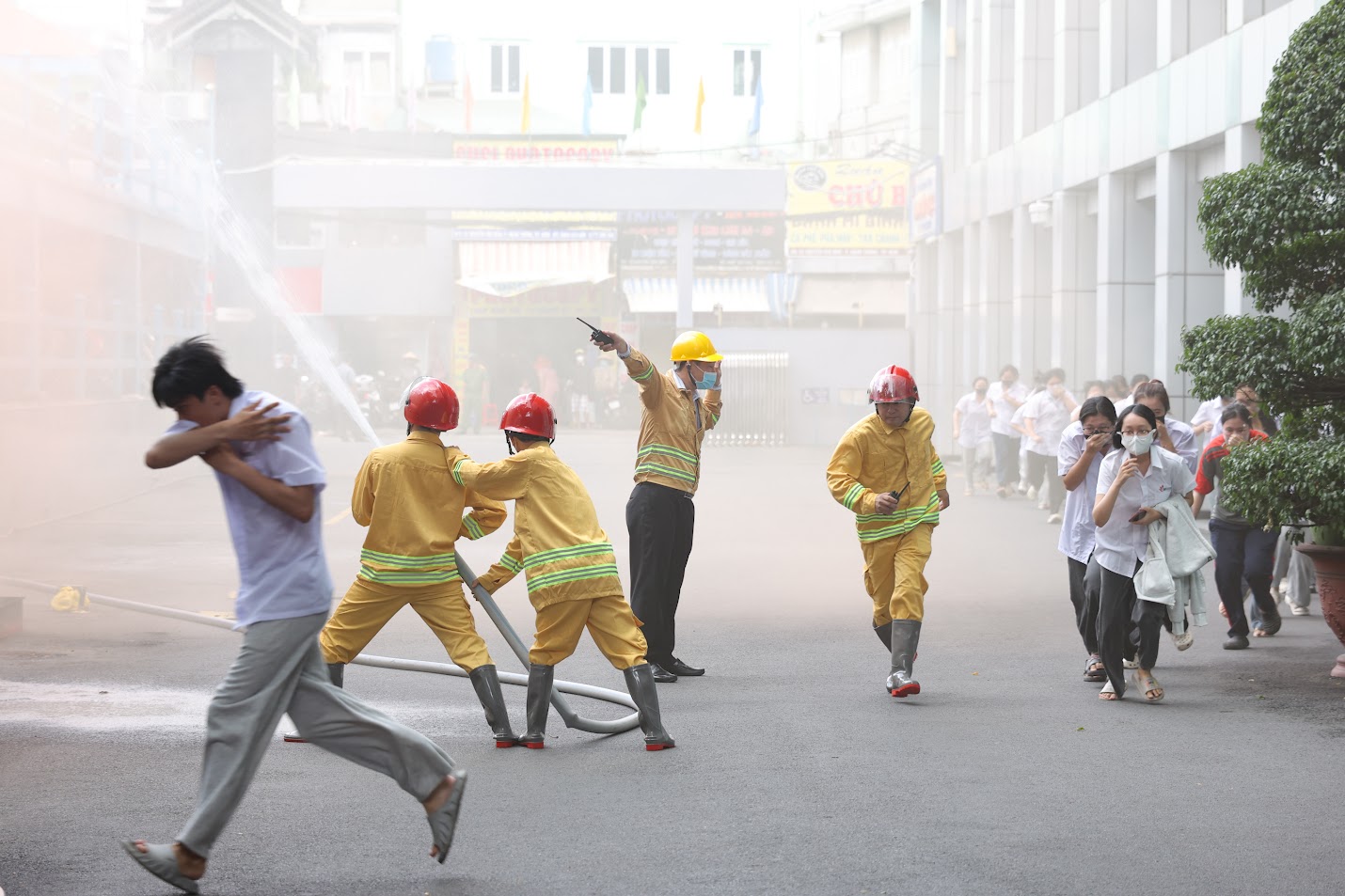
The simulated emergency scenario was designed to closely reflect real-life conditions at the Industrial University of Ho Chi Minh City.
A realistic emergency scenario
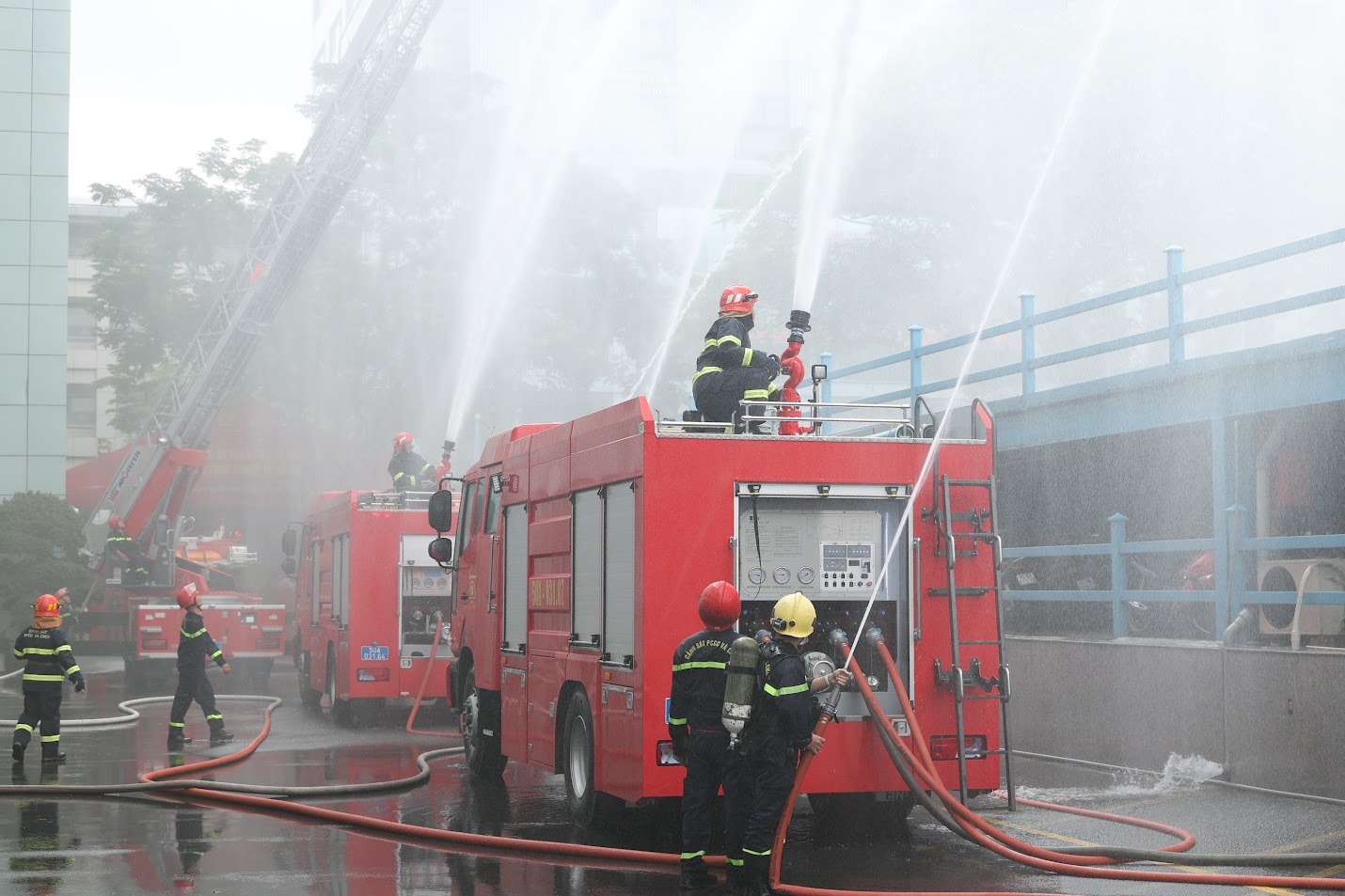
According to the exercise plan, the simulated incident began in the central underground parking garage, where a fuel leak came into contact with a heat source and ignited. In the enclosed space, the fire spread rapidly, while dense smoke and toxic gases filled the area, making evacuation increasingly difficult.
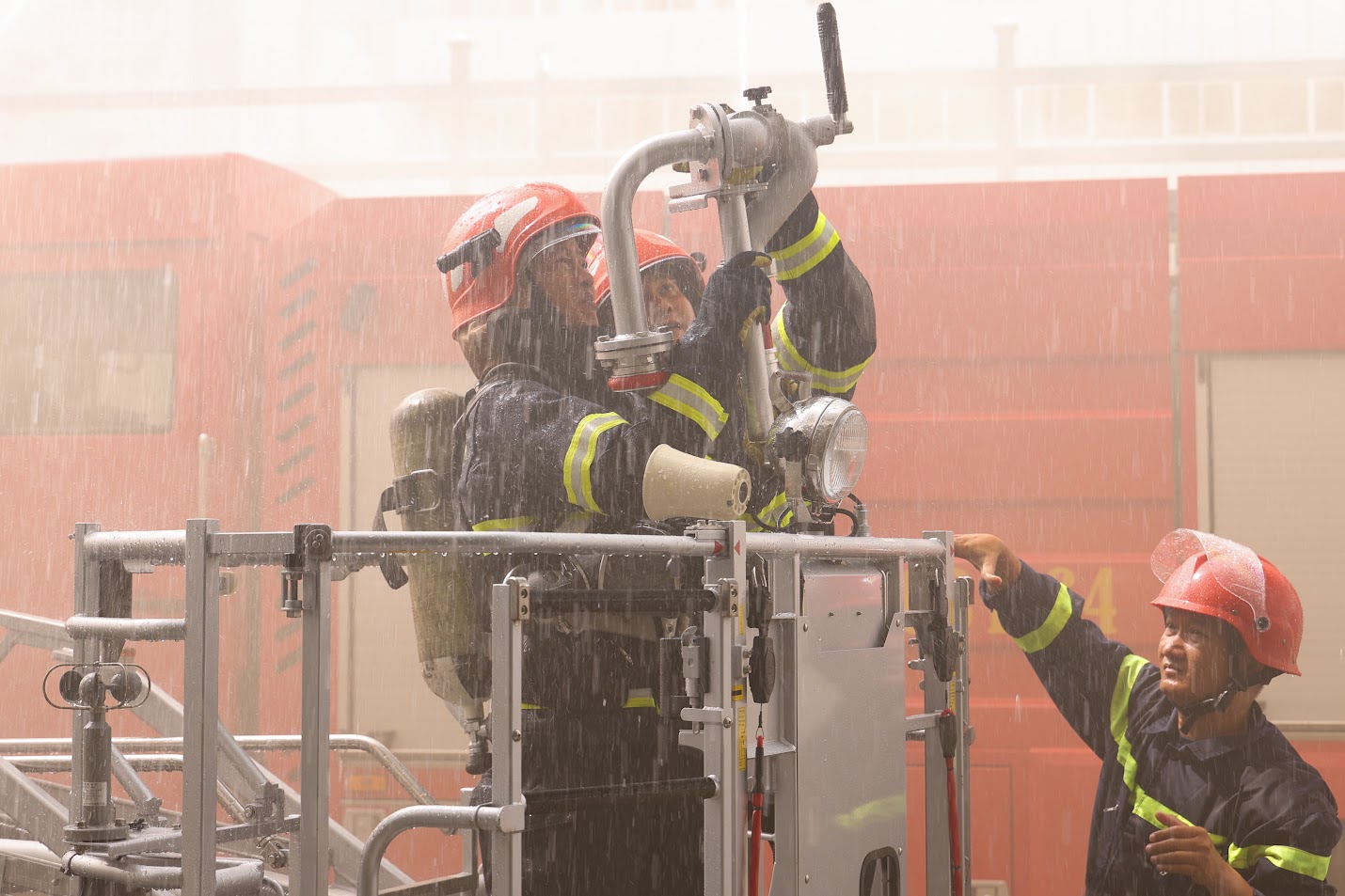
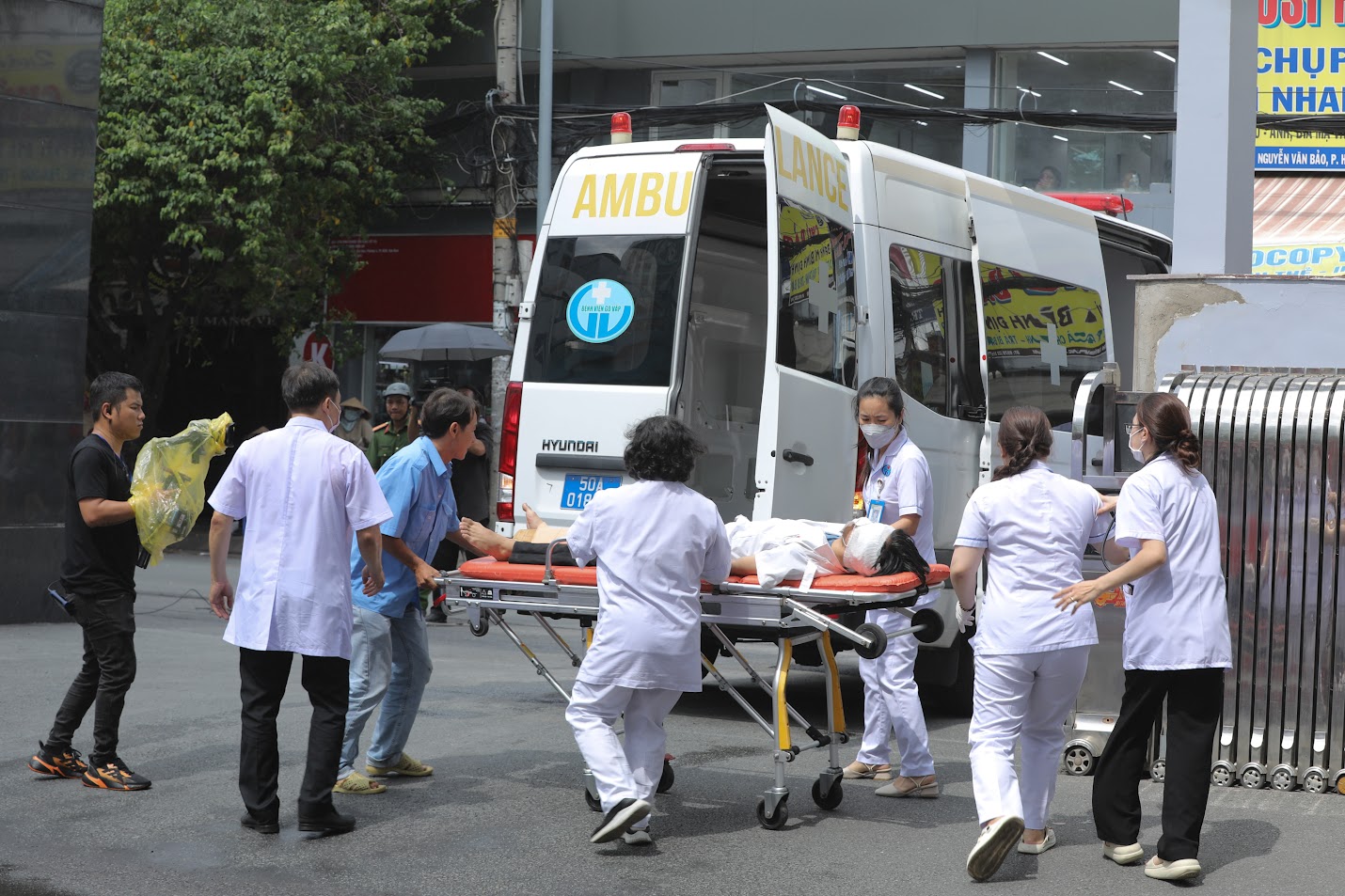
At the same time, a separate electrical short circuit triggered another fire on the fifth floor of Building A, creating a dual-fire emergency with multiple people trapped in different locations. Responding forces simultaneously carried out emergency notification, evacuation guidance, initial firefighting, rescue operations, first aid for victims, traffic control, and coordinated command among multiple participating agencies.Under the simulated scenario, approximately 200 people were studying and working in the affected buildings at the time of the incident. The University's on-site fire safety force immediately activated its emergency response plan, guiding everyone to designated assembly areas before professional firefighters arrived at the scene.
At the same time, a separate electrical short circuit triggered another fire on the fifth floor of Building A, creating a dual-fire emergency with multiple people trapped in different locations. Responding forces simultaneously carried out emergency notification, evacuation guidance, initial firefighting, rescue operations, first aid for victims, traffic control, and coordinated command among multiple participating agencies.Under the simulated scenario, approximately 200 people were studying and working in the affected buildings at the time of the incident. The University's on-site fire safety force immediately activated its emergency response plan, guiding everyone to designated assembly areas before professional firefighters arrived at the scene.
.jpg)
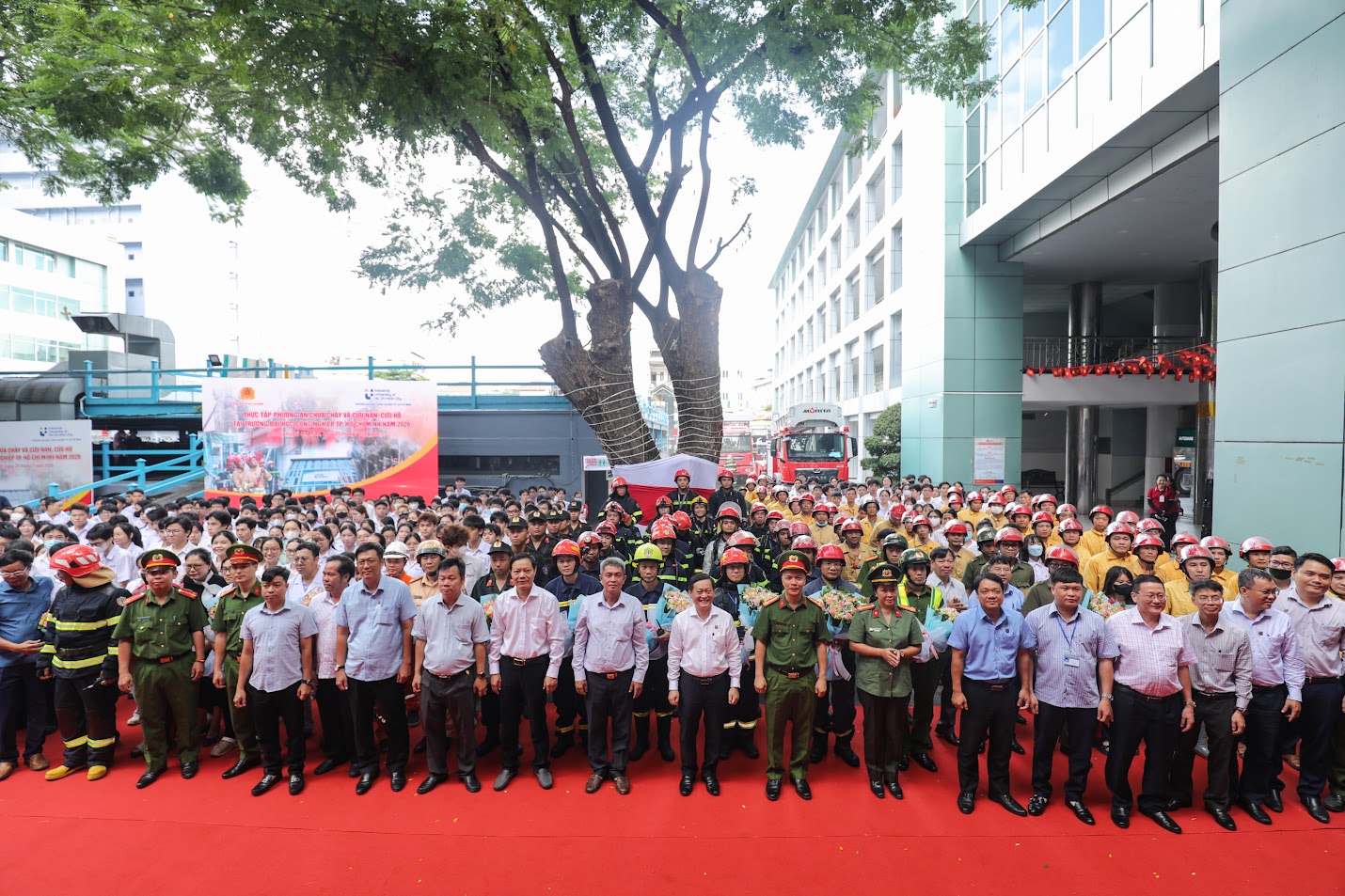
The exercise involved approximately 200 students, faculty members, and staff on campus.
Nearly two months of preparation
To ensure the exercise was conducted safely and effectively, PC07 and the Industrial University of Ho Chi Minh City jointly developed the response plan several weeks in advance.
Over nearly two months, participating units conducted repeated training sessions, joint rehearsals, and full-scale simulations. Every location, assigned responsibility, and coordination procedure was carefully reviewed to ensure that each emergency would be handled in accordance with established protocols. This thorough preparation not only contributed to the success of the exercise but also strengthened cooperation among the participating agencies.
The drill mobilized hundreds of firefighters, police officers, faculty members, staff, and students. In addition to PC07 personnel, participants included Fire and Rescue Teams from Areas 15, 16, and 17; the Traffic Police Division (PC08); the Mobile Police Division (PK02); the Police and Military Command of Hanh Thong Ward; the Hanh Thong Ward Medical Center; Go Vap General Hospital; Gia Dinh Power Company; Trung An Water Supply Joint Stock Company; and many other supporting agencies.
Strengthening emergency preparedness at higher education institutions
As one of Ho Chi Minh City's largest universities, the Industrial University of Ho Chi Minh City accommodates tens of thousands of students, faculty members, and staff every day. Its extensive campus, comprising multiple high-rise buildings, centralized parking facilities, and a large daily population, requires comprehensive fire safety and emergency preparedness measures.Assoc. Prof. Dr. Phan Hong Hai, Secretary of the Party Committee and Rector of the University, emphasized: "Fire prevention, firefighting, and rescue operations are always regarded as an ongoing priority at the University. We continuously invest in technical infrastructure and safety equipment, develop our on-site fire safety force, and organize regular training and emergency drills to strengthen our readiness for potential emergencies."
Over nearly two months, participating units conducted repeated training sessions, joint rehearsals, and full-scale simulations. Every location, assigned responsibility, and coordination procedure was carefully reviewed to ensure that each emergency would be handled in accordance with established protocols. This thorough preparation not only contributed to the success of the exercise but also strengthened cooperation among the participating agencies.
The drill mobilized hundreds of firefighters, police officers, faculty members, staff, and students. In addition to PC07 personnel, participants included Fire and Rescue Teams from Areas 15, 16, and 17; the Traffic Police Division (PC08); the Mobile Police Division (PK02); the Police and Military Command of Hanh Thong Ward; the Hanh Thong Ward Medical Center; Go Vap General Hospital; Gia Dinh Power Company; Trung An Water Supply Joint Stock Company; and many other supporting agencies.
Strengthening emergency preparedness at higher education institutions
As one of Ho Chi Minh City's largest universities, the Industrial University of Ho Chi Minh City accommodates tens of thousands of students, faculty members, and staff every day. Its extensive campus, comprising multiple high-rise buildings, centralized parking facilities, and a large daily population, requires comprehensive fire safety and emergency preparedness measures.Assoc. Prof. Dr. Phan Hong Hai, Secretary of the Party Committee and Rector of the University, emphasized: "Fire prevention, firefighting, and rescue operations are always regarded as an ongoing priority at the University. We continuously invest in technical infrastructure and safety equipment, develop our on-site fire safety force, and organize regular training and emergency drills to strengthen our readiness for potential emergencies."
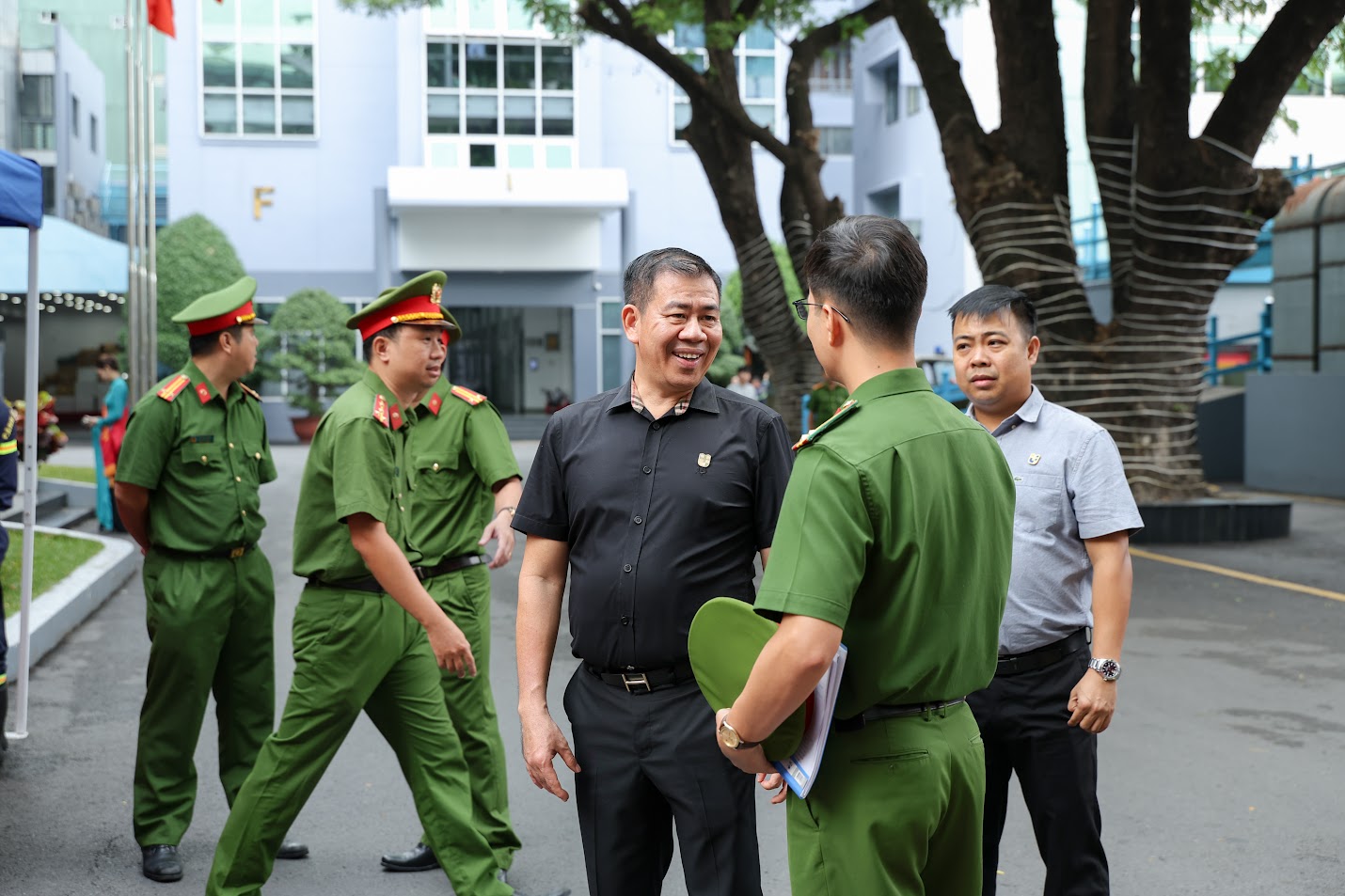
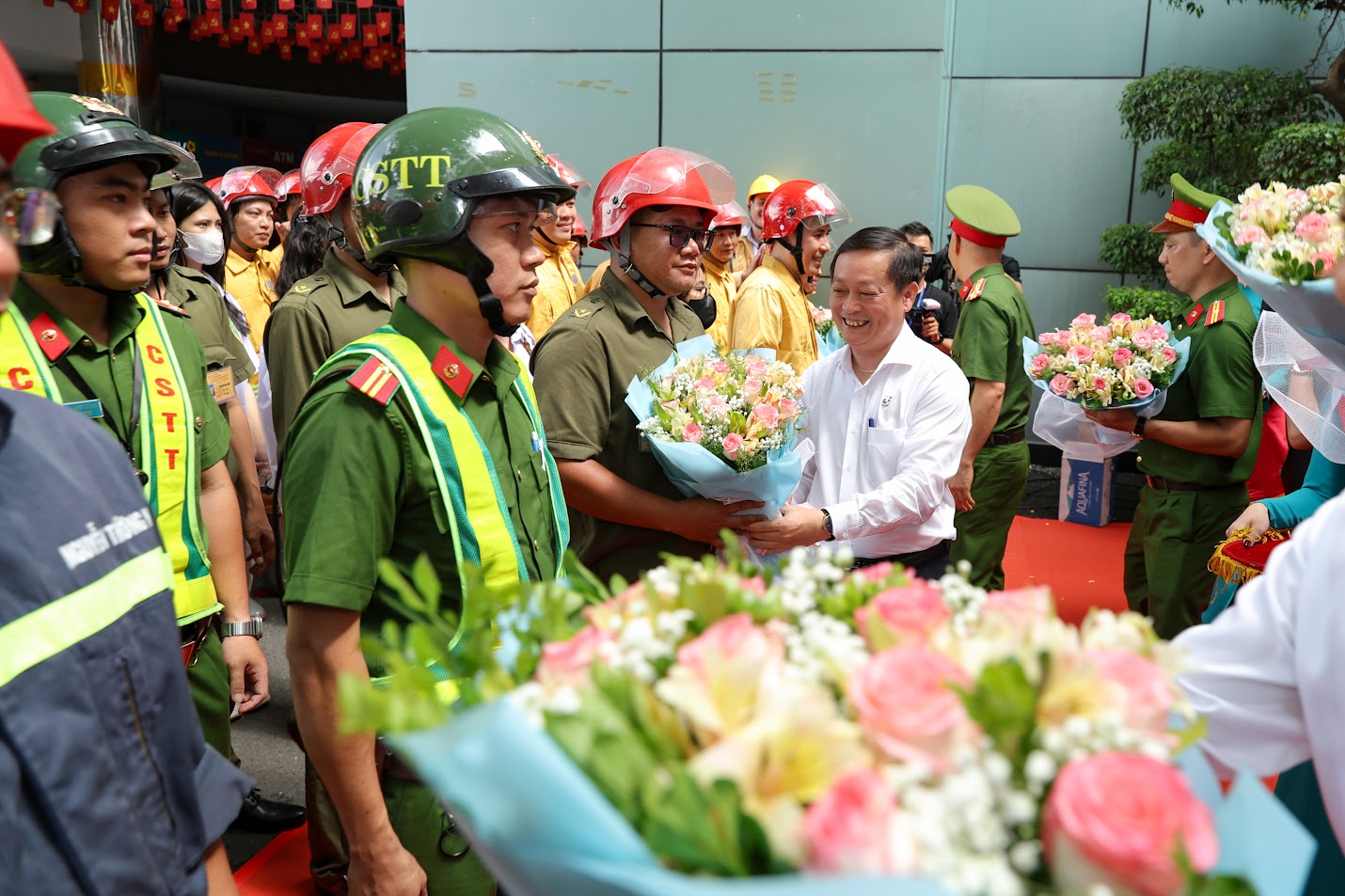
Assoc. Prof. Dr. Phan Hong Hai, Secretary of the Party Committee and Rector, discussed the exercise with members of the firefighting and rescue forces.
The exercise also provided participating agencies with an opportunity to evaluate the effectiveness of their command and coordination mechanisms, review emergency response procedures, and strengthen cooperation between the University's on-site fire safety force and professional firefighting units.
More importantly, the activity helped improve awareness and equip faculty members, staff, and students with essential evacuation skills and initial emergency response knowledge. As higher education institutions continue to expand in scale and complexity, with larger campuses and growing populations, conducting realistic emergency drills plays a vital role not only in testing response plans but also in building a safer and more resilient learning environment.
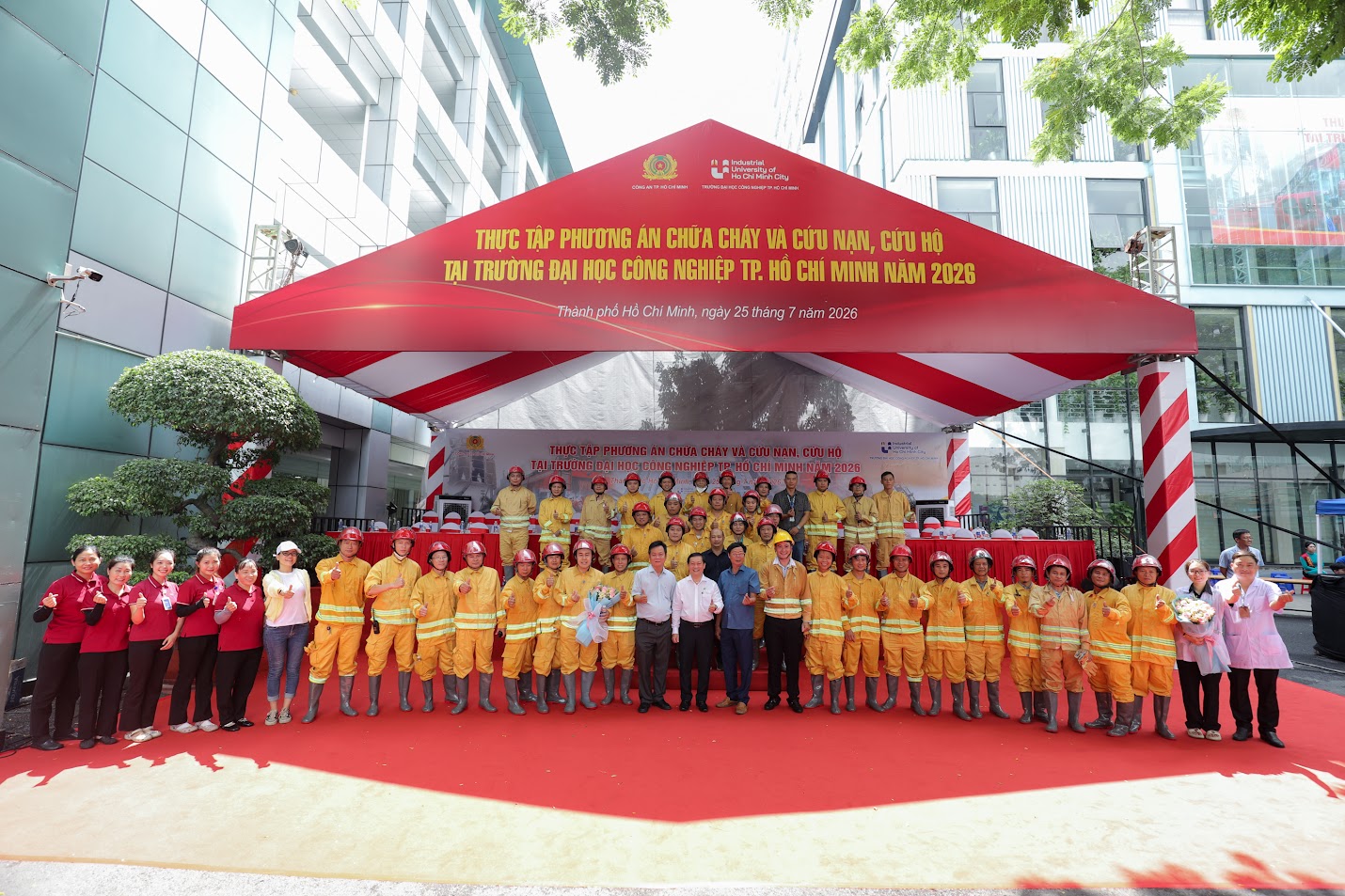
Highlights from the emergency drill:
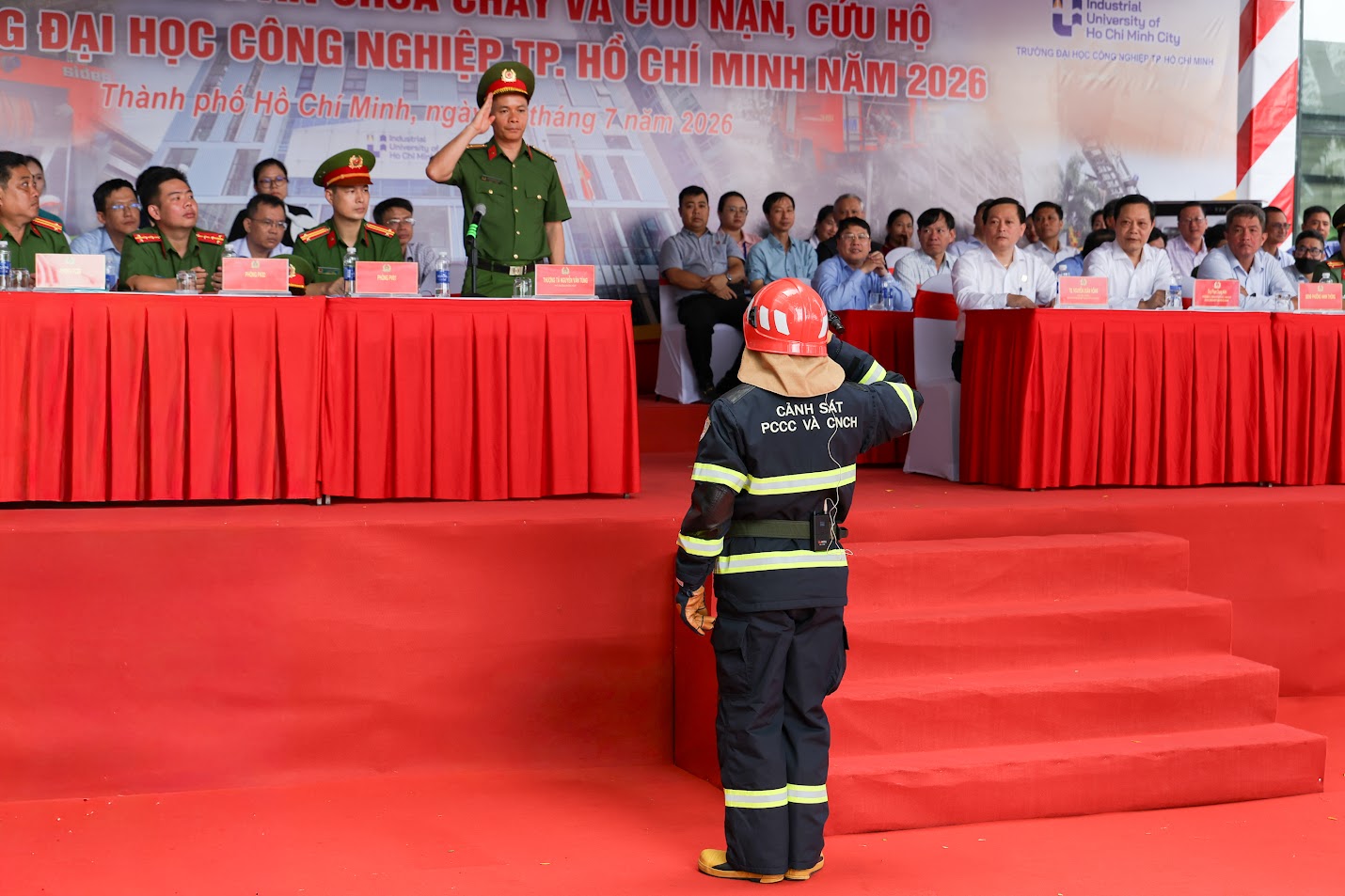
More importantly, the activity helped improve awareness and equip faculty members, staff, and students with essential evacuation skills and initial emergency response knowledge. As higher education institutions continue to expand in scale and complexity, with larger campuses and growing populations, conducting realistic emergency drills plays a vital role not only in testing response plans but also in building a safer and more resilient learning environment.
Highlights from the emergency drill: