
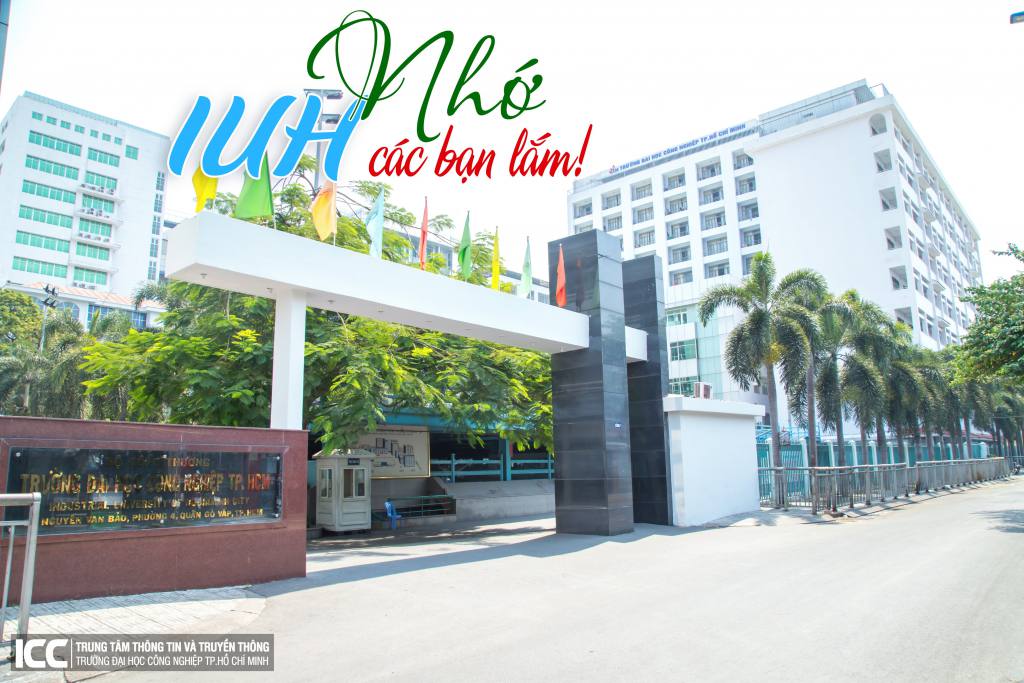

The newly announced list of talent training programs includes five master’s programs from the Industrial University of Ho Chi Minh City (IUH). Their inclusion marks both an important milestone and a commitment to maintaining and continuously enhancing quality standards throughout implementation.
The Ministry of Education and Training has officially approved the list of talented engineering and master’s programs in STEM fields participating in the Project for Training Human Resources to Support High-Tech Development for the 2025–2035 period, with a vision toward 2045. Notably, many educational institutions in Ho Chi Minh City are represented with key disciplines, reflecting the city’s central role in the national human resource development strategy.
In this list, the Industrial University of Ho Chi Minh City offers five approved master’s programs: Biotechnology, Mechanical Engineering, Chemical Engineering, Electronic Engineering, and Food Technology. These are all fields directly linked to industrial development, manufacturing, and technological innovation, and they also have strong potential to generate high added value in the context of digital transformation and the knowledge economy.
The Ministry of Education and Training has officially approved the list of talented engineering and master’s programs in STEM fields participating in the Project for Training Human Resources to Support High-Tech Development for the 2025–2035 period, with a vision toward 2045. Notably, many educational institutions in Ho Chi Minh City are represented with key disciplines, reflecting the city’s central role in the national human resource development strategy.
In this list, the Industrial University of Ho Chi Minh City offers five approved master’s programs: Biotechnology, Mechanical Engineering, Chemical Engineering, Electronic Engineering, and Food Technology. These are all fields directly linked to industrial development, manufacturing, and technological innovation, and they also have strong potential to generate high added value in the context of digital transformation and the knowledge economy.
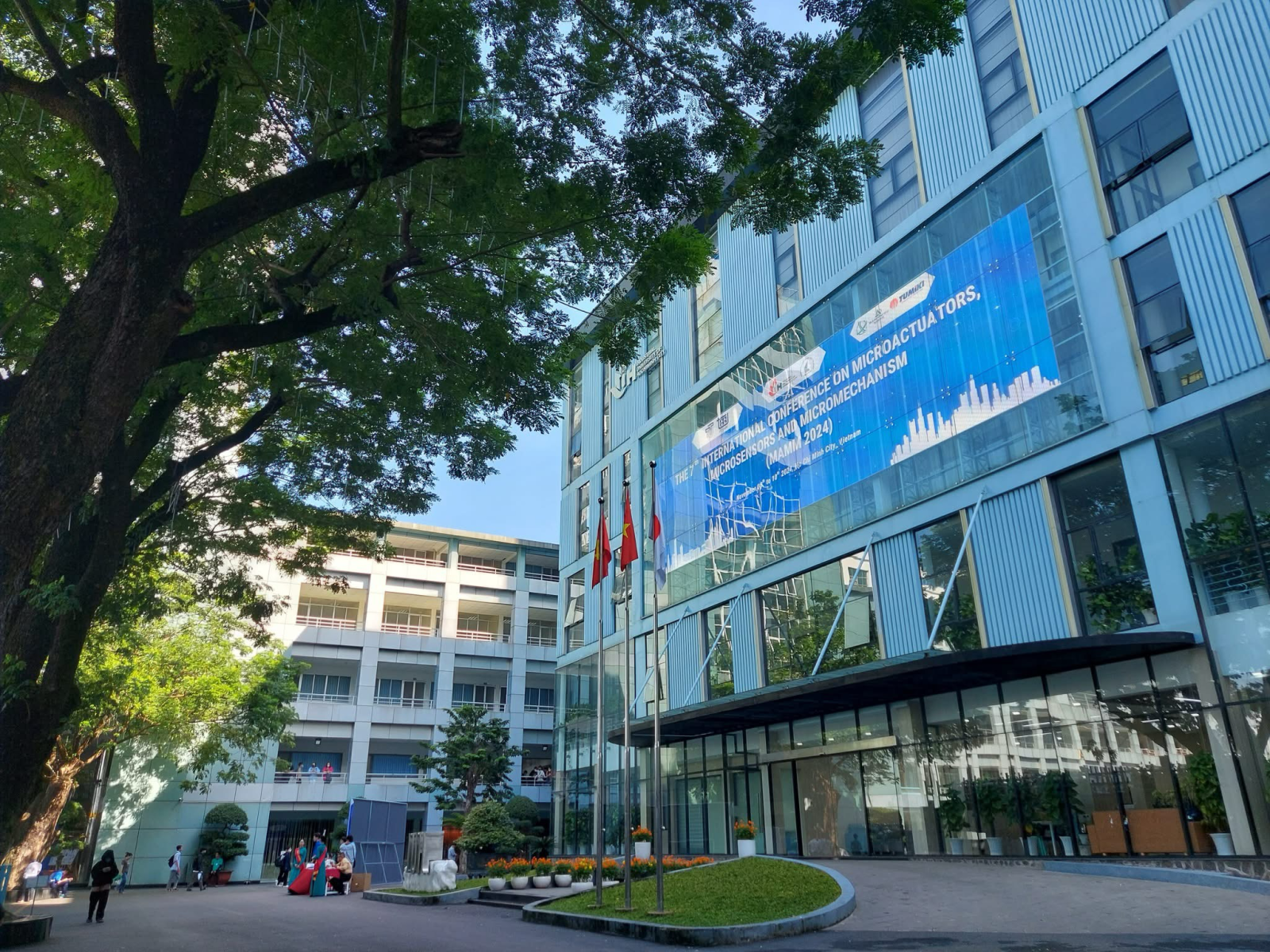
Industrial University of Ho Chi Minh City.
STEM encompasses the fields of Science, Technology, Engineering, and Mathematics, which are regarded as the foundation for high-tech development and the knowledge-based economy. With strong expertise in engineering education, IUH has consistently focused on developing programs aligned with industrial and technological demands.
According to the Ministry of Education and Training, programs participating in the project must meet talent-training standards, including strict requirements regarding faculty quality, facilities, and academic environment. This means participating institutions are required to comprehensively upgrade their programs, from curriculum content to teaching methodologies, in order to approach international standards.
Dr. Lê Ngọc Sơn, Director of the Institute of International and Postgraduate Education, stated:
“The approval of multiple programs reflects long-term preparation in the University’s postgraduate development strategy, particularly in STEM fields. Beyond providing specialized knowledge, these talented master’s programs are expected to cultivate a workforce capable of research, innovation, and rapid adaptation to technological change.”
Alongside approval comes strict monitoring requirements. The Ministry of Education and Training stated that these programs will undergo periodic evaluations regarding training quality, faculty capacity, and assurance conditions. Institutions failing to meet the required standards may face suspension of admissions or discontinuation of program implementation, ensuring output quality and preventing quantity-driven expansion.
In the context of increasingly intense competition for high-quality human resources, investment in talent development programs is not merely the responsibility of individual universities but also a national strategy. Fields such as biotechnology, electronic engineering, and mechanical engineering not only serve manufacturing industries but also form the foundation for high-tech sectors, including semiconductors, automation, and green industry development.
According to the Ministry of Education and Training, programs participating in the project must meet talent-training standards, including strict requirements regarding faculty quality, facilities, and academic environment. This means participating institutions are required to comprehensively upgrade their programs, from curriculum content to teaching methodologies, in order to approach international standards.
Dr. Lê Ngọc Sơn, Director of the Institute of International and Postgraduate Education, stated:
“The approval of multiple programs reflects long-term preparation in the University’s postgraduate development strategy, particularly in STEM fields. Beyond providing specialized knowledge, these talented master’s programs are expected to cultivate a workforce capable of research, innovation, and rapid adaptation to technological change.”
Alongside approval comes strict monitoring requirements. The Ministry of Education and Training stated that these programs will undergo periodic evaluations regarding training quality, faculty capacity, and assurance conditions. Institutions failing to meet the required standards may face suspension of admissions or discontinuation of program implementation, ensuring output quality and preventing quantity-driven expansion.
In the context of increasingly intense competition for high-quality human resources, investment in talent development programs is not merely the responsibility of individual universities but also a national strategy. Fields such as biotechnology, electronic engineering, and mechanical engineering not only serve manufacturing industries but also form the foundation for high-tech sectors, including semiconductors, automation, and green industry development.