
Nearly 80 IUH faculty and staff members and their relatives participated in a four-day health support program organized by the Department of Biotechnology, with approximately 160 sessions held.
From July 28 to 31, 2026, the Department of Biotechnology, Institute of Biotechnology and Food Technology, Industrial University of Ho Chi Minh City (IUH), organized a health support program for faculty, staff, and their family members. Dr. Bui Hong Quan, Head of the Department of Biotechnology, led the activities, with a group of trainees participating.
From July 28 to 31, 2026, the Department of Biotechnology, Institute of Biotechnology and Food Technology, Industrial University of Ho Chi Minh City (IUH), organized a health support program for faculty, staff, and their family members. Dr. Bui Hong Quan, Head of the Department of Biotechnology, led the activities, with a group of trainees participating.
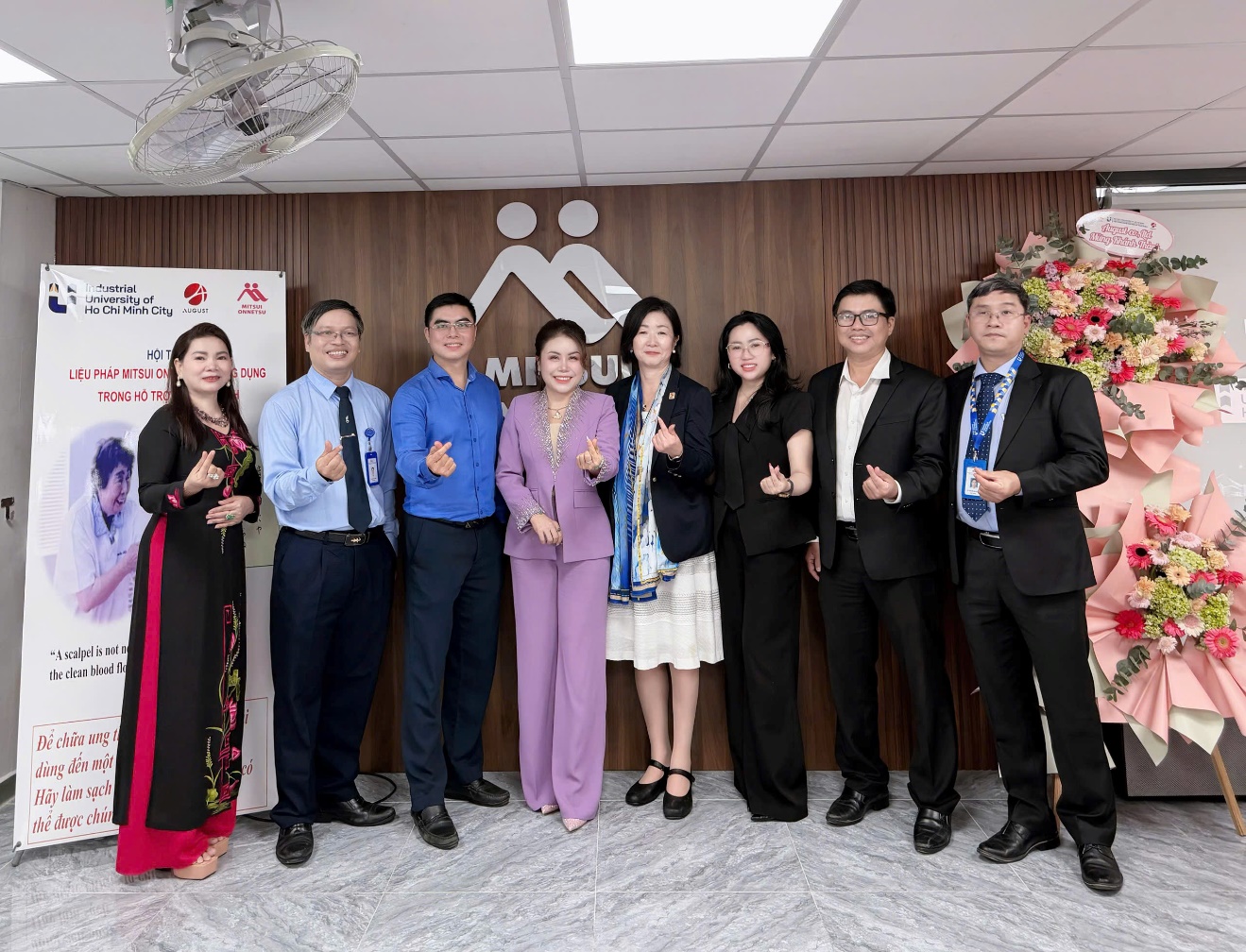
The program was held at the Multifunctional Aesthetic Biotechnology and Mitsui Thermal Therapy Room, which was inaugurated and put into operation to support training and health care activities.
Mỗi ngày chương trình tổ chức bốn ca, mỗi ca kéo dài 90 phút. Người tham gia được trao đổi ban đầu về thói quen làm việc, tư thế đứng lớp, vị trí thường xuyên căng mỏi để lựa chọn vùng cần chăm sóc.
This information helped the team identify areas requiring attention and provide appropriate support.
The activities were designed to help ease muscle tension and improve comfort in daily movement, particularly for those who spend long hours teaching, working at computers, or remaining in the same posture for extended periods.
The sessions combined manual techniques targeting the muscles and fascia with thermal therapy, which was used to warm the targeted areas before more focused manual techniques were applied. No medication or invasive procedures were involved.
The organizers emphasized that the activities were intended solely as supportive care and were not a substitute for medical examination, diagnosis, or treatment. Participants showing signs requiring medical attention were advised to visit a healthcare facility, while those already undergoing treatment were encouraged to continue following their physicians' instructions.
Over the four days, approximately 160 sessions were conducted for nearly 80 participants. Many faculty and staff members registered for additional sessions after their first visit, while some also encouraged family members to join the program.
Ms. Nguyen Thi Thanh Lan, a librarian at the IUH Library Center, said that spending long hours at a computer often left her with tension in her neck and shoulders. She registered as soon as she learned about the activity.
"My work requires me to spend a lot of time at the computer, so I often experience tension in my neck and shoulders. As soon as I heard that the University was organizing this activity, I signed up. Because of my workload, I could only attend one session, but afterward, my shoulders felt much lighter," Ms. Lan said.
Other participants also said they felt more comfortable after the sessions, including easier neck movement, less heaviness in the shoulders, and reduced back tension when standing up.
A notable feature of the initiative was the combination of Nam y manual therapy and Mitsui thermal therapy from Japan.
The activities took place at the Multifunctional Aesthetic Biotechnology and Mitsui Thermal Therapy Room under the Institute of Biotechnology and Food Technology. Mitsui Onnetsu of Japan supported the facility's development, and it is equipped with Mitsui thermal therapy devices and treatment beds.
Therapists used thermal therapy to warm targeted areas before applying manual techniques to the muscles and fascia. The areas requiring attention were identified through consultation with each participant rather than through a one-size-fits-all procedure.
According to Dr. Bui Hong Quan, the initiative was developed in response to the working conditions of faculty and staff members, many of whom spend long hours teaching, working at computers, or maintaining the same posture for extended periods.
"Our teachers may spend an entire class standing or stay up late grading assignments. Neck and shoulder tension can become so common that people learn to live with it. During these four days, we tried to help ease some of that tension. It may seem like a small change, but with regular care, people may notice a meaningful difference in how they feel," Dr. Bui Hong Quan said.
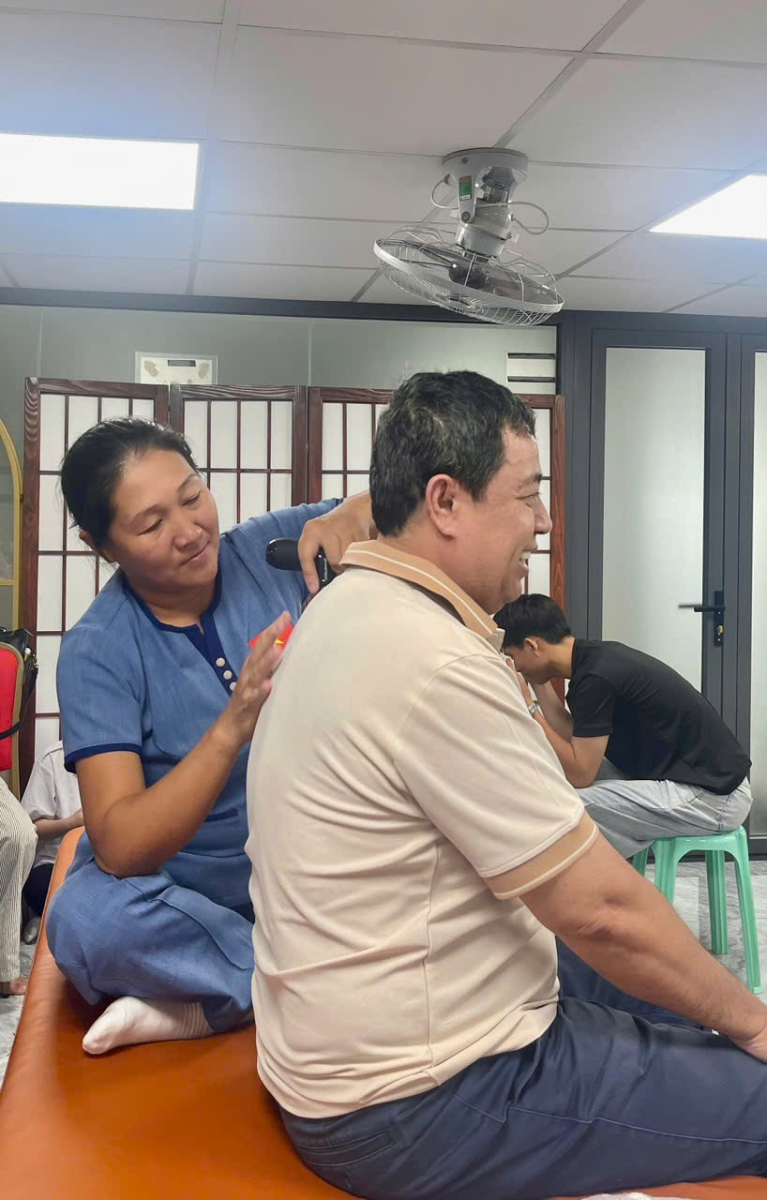
Ms. Tran Thanh Ha provides support during a care session for an IUH faculty member.
The initiative also made supportive health care approaches more accessible to the IUH community while raising awareness of common work-related muscle tension and the importance of paying attention to physical well-being.
Thêm cơ hội thực hành cho sinh viên
In addition to supporting the well-being of faculty, staff, and their relatives, the program provided trainees and students from the Institute of Biotechnology and Food Technology with opportunities to strengthen their practical skills under the supervision of lecturers and qualified practitioners.
Students majoring in Aesthetic Biotechnology receive training in areas related to physical therapy and massage, health and beauty care in spa and wellness settings, therapeutic approaches to beauty and health care, and herbal and natural beauty care.
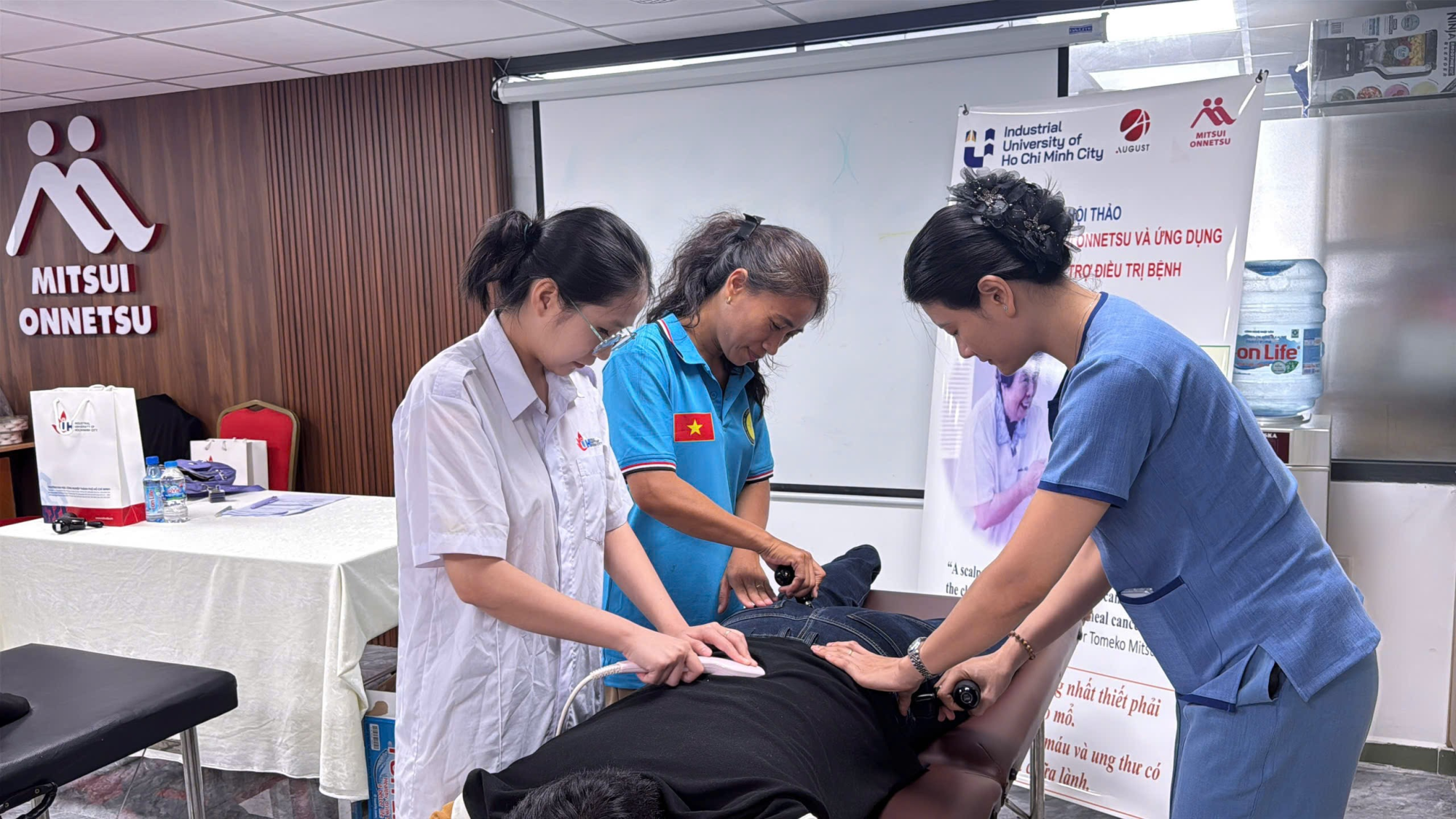
During the program, Nam y manual therapy was combined with Mitsui thermal therapy to provide complementary support. Students from the Institute of Biotechnology and Food Technology at IUH conducted the sessions with practitioners from ITMED specializing in Nam y manual therapy.
Meanwhile, students specializing in Biomedical Biotechnology study areas including biochemistry, pharmacology, disease mechanisms, anatomy, and tissue biology.
Through these practical activities, students had opportunities to apply their academic knowledge, strengthen their communication skills, collect relevant information from participants, and perform appropriate techniques under professional supervision.
Working alongside Dr. Bui Hong Quan, a group of trainees received instruction in Nam y manual therapy from Dr. Quan and Ms. Tran Thanh Ha. Each session gave them additional experience in communicating with participants, identifying areas requiring attention, and applying suitable techniques.
According to the Department of Biotechnology, the initiative also reflects an approach to connecting education with practice, helping students better understand professional expectations, the limits of their scope of practice, and their responsibilities to those receiving care.
Building on the initial results, the Department of Biotechnology plans to organize similar health support activities regularly and gradually expand access across the University.
The initiative is expected to foster further a culture of proactive health care among IUH faculty and staff while providing students in relevant fields with additional hands-on learning opportunities.